In Singapore’s bilingual education system, most of the students we support grow up in an English-dominant bilingual environment. While they learn Chinese from a young age, English is typically the primary language of instruction, academic content, and daily communication.
English is an alphabetic writing system built on grapheme-phoneme correspondences. Students are trained to decode words through phonicsby blending sounds in a linear sequence.
Chinese, however, is a morphosyllabic writing system where each character represents a syllable and typically carries meaning. Characters integrate visual form, sound and meaning.
Because Chinese characters possess complex internal visual structures, students with dyslexia often fall into these common error patterns:
A. Visual-Orthographic Errors
In English, “sun” and “son” sound the same but look different. In Chinese, many characters look nearly identical except for one tiny stroke. For students with dyslexia, such fine visual distinctions can be difficult to process and retain.
For example:
Correct Character
Mistaken For
Key Difference
买 (mǎi – buy)
卖 (mài – sell)
卖 contains an additional 十 component on top.
渴 (kě – thirsty)
喝 (hē – drink)
Different semantic radicals: 氵 (water) vs 口 (mouth).
自 (zì – self)
白 (bái – white)
自 contains an extra internal horizontal stroke.
These errors reflect weak orthographic representations and reduced sensitivity to spatial configuration — a skill that is especially important in Chinese.
B. Phonological Errors
Students may substitute a character with one that sounds similar, even if the meaning differs.
This often happens when students over-rely on the phonetic component (声旁) without verifying tone or meaning.
For example:
Correct Character
Mistaken For
情 (qíng – feeling)
青 (qīng – green)
进 (jìn – in)
近 (jìn – near)
C. Semantical Errors
The student swaps the target word for a synonym or a related concept. This could be a result of a reliance on context clues and “guessing” rather than character-level decoding.
For example:
Correct Character
Mistaken For
Possible causes
医(yī)
生 (shēng)
student swaps the target word for
a related concept (医生)
书 (shū)
本 (běn)
student swaps the target word for
a related concept (书本)
DAS Intervention Strategies: Cracking the Code
At the Dyslexia Association of Singapore (DAS), we adopt a structured, explicit, and multisensory approach. Our goal is to move beyond rote copying (“writing lines”) and towards strategic decoding and structural awareness.
Strategy 1: Radical & Phonetic Awareness
We teach students to treat characters as functional systems composed of meaningful parts.
Semantic Radical Awareness (偏旁)
Students learn that certain radicals often indicate meaning categories.
For example, the 氵 radical is commonly associated with water-related meanings:
河 (river), 海 (sea), 湖 (lake)
Phonetic Component Awareness (声旁)
Students learn to identify phonetic components that provide pronunciation clues.
If a student recognises 青, they can generate possible pronunciations for:
清, 晴, 情
Importantly, we teach students to verify tone and meaning rather than rely solely on sound similarity.
We systematically teach character structure types. For example:
We systematically teach character structure types. For example:
Left-right structure
好
Top-bottom structure
苗
Semi-enclosed
近
问
Fully enclosed
国
Strategy 3: Application of word recognition strategies
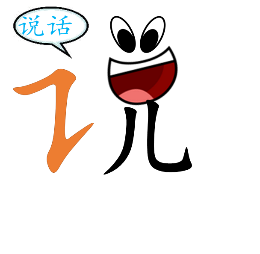
Apart from introducing methods such as Semantic Radical and the Phonetic Radical Method. We also encourage our students to use other strategies such as using the pictorial method or mnemonics to help them remember and recall the words learnt.
Mnemonic and pictorial strategies support memory consolidation, especially for students with working memory weaknesses.
Example of Mnemonic strategies
Example of pictorial strategies
休 can be remembered as “A person (亻) is leaning against a tree (木) to take a rest.”
Strategy 4: Incorporating multisensory strategies
Research consistently supports multisensory intervention for dyslexia.
In our classrooms, students engage multiple modalities:
Visual: Use color-coded radicals to highlight different components.
For example, 想 consists of components 木、目and semantic radical 心字底(心)different colours can be used to highlight the different components.
Kinesthetic/Tactile: Encourage “air-writing” or tracing characters on textured surfaces to enhance memory for stroke sequences.
Example of textured surfaces such as textile, corkboard, corrugated paper and tracing characters in sand.
From Compensation to Confidence
By shifting from rote memorization to structural and multisensory awareness, we help students transition from error-prone guessing to strategic decoding.
The DAS Chinese Programme is an intervention-based programme for students with dyslexia, Specific Learning Difficulties and struggling learners who have persistent difficulties with learning Chinese. Find out more here.