The DAS Chinese Programme is an intervention-based programme for students with dyslexia, Specific Learning Difficulties and struggling learners who have persistent difficulties with learning Chinese. The programme supports learners from 7 to 17 years-old in their learning of Chinese by teaching them skills and strategies to learn the language independently. Our programmes are all research-based. Research and evaluation will be conducted consistently to ensure the programme suits our students’ needs.
“My child hates Chinese!” is a sentiment shared by many parents, not just those with dyslexia! We understand that it is not an easy task as your child probably faces one if not many of the following difficulties when learning Chinese:
Confusion with similar-looking characters (相似字形的混淆)爱 vs 受 Characters that sound alike (发音相似的字) Characters that are related in meaning (字义相近的字)
The Chinese programme focuses on the following aspects to help increase efficiency in learning and interest in the Chinese language: 华文课程专注于以下几个方面,以提高学习效率和对中文语言的兴趣:
Common vocabulary and sentence structure to enhance learner’s expressiveness in Chinese. 常用词汇和句式结构,以增强学生华语的表达能力。
Word recognition strategies instruction to enhance the learner’s ability to recognise Chinese characters. 识字策略教学,以提高学生辨识华文字符的能力。
Morphological awareness to expand learner’s vocabulary network. 形态意识,扩展学生的词汇网络。
Reading comprehension and writing strategies instruction for the learner to gain competency in higher-order literacy skills. 阅读理解和写作策略教学,使学生在高阶读写技能上具备竞争力。
Dyslexia affects the learning of all languages. Simply put, dyslexia affects how your child processes the sounds of the language. Besides difficulties in reading and writing in the language, very often, your child’s processing skills are also affected. Learning of Chinese can also be more challenging for your child because of the way Chinese characters are written.
To motivate children to learn, we will build their interest first. We set up a safe and friendly learning environment, to encourage students to use the language as much as they can. To make Chinese more interesting and useful, our lesson plans are full of activities and games, we also choose thematic-based topics which are closer to their daily life.
Diagnostic and Prescriptive: Before your child starts intervention with us, there is profiling for us to get to know your child better. This allows your child to be in a class that is suited for him/her. Informal tests are also done in the classroom for us to know how much your child knows or has learnt and what to teach next.
Cognitive: Your child is taught to think about his/her learning, understand the reasons behind them and how to use the strategies to help them develop their skills in reading, spelling and writing.
Emotionally Sound: Learning is pegged at the level of your child’s ability with a reasonable level of challenge
注重学生的感受:学习进度会根据您的孩子的学习能力而做出相应的调整,提供适度的挑战性。
Simultaneously multisensory: We use a mix of the learning pathways: seeing, hearing, feeling and awareness of motion to help your child understand what is to be learnt with greater ease and success.
同时并用多重感官:我们运用不同的学习途径,比如:视觉、听觉、触觉和动作来帮助您的孩子更好地学习。
Structured, sequential and cumulative: Reviews help your child to better retain what they have learnt. New skills are taught in bite-sizes with easy-to-follow instructions. The teaching of higher-order language skills of reading comprehension and writing starts with simpler skills such as speaking and listening.
The DAS Chinese Programme is open to students who encounter difficulties in their learning journey, whether they have a formal diagnosis or not. This approach recognizes that learning difficulties may not always fit neatly into a specific diagnosis but still require tailored support.
Class duration 课程时长: 1 hour per lesson; once a week 1周1次,1次1小时
Class size班级人数:5
2-hour programme 小学两小时课程
Suitable for 适合于: Primary 4 to 6 Students 小四至小六的学生
Class duration 课程时长: 2 hours per lesson; once a week 1周1次,1次2小时
Class size 班级人数:6
Teaching content 教学内容
We adopt a thematic-based approach and focus on word recognition strategies to help students over their challenges when learning Chinese characters. Depending on the ability of your child, we may cover the following components in the classroom:
Suitable for 适合于: Secondary 4 students taking the O Level and N level examination 应对O水准和N水准考试的中四的学生
Class duration 课程时长: 2 hours per lesson; once a week 1周1次,1次2小时
Term 1 and 2 (recommended for students taking O Level Chinese) 第一和第二学期(推荐考O水准华文的学生
Term 1 to 3 (recommended for students taking N Level Chinese) 第一到第三学期 (推荐考N水准华文的学生)
Class size 班级人数:8
Teaching content 教学内容:
Our programme aims to help students to build up on their higher order literacy skills targeted at reading comprehension and writing tasks. Topics discussed and vocabulary introduced will be in relevance to the national exams.
The Chinese programme was started in 2013. Since then, the programme has helped more than 600 students in their learning of Chinese. We support learners with dyslexia from seven to sixteen years old in their learning of Chinese by teaching them skills and strategies to learn the language independently. Our programmes are all research-based. Research and evaluation will be conducted consistently to ensure the programme suits our students’ needs.
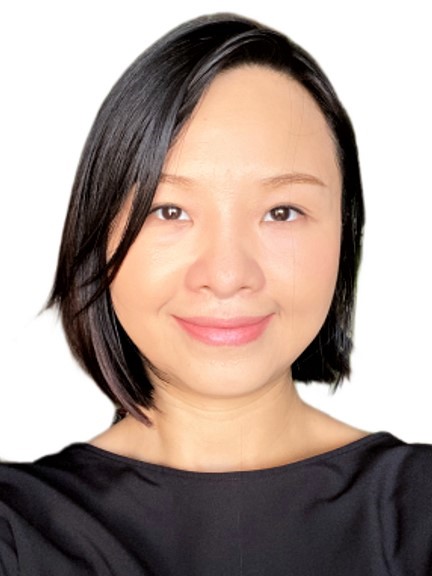
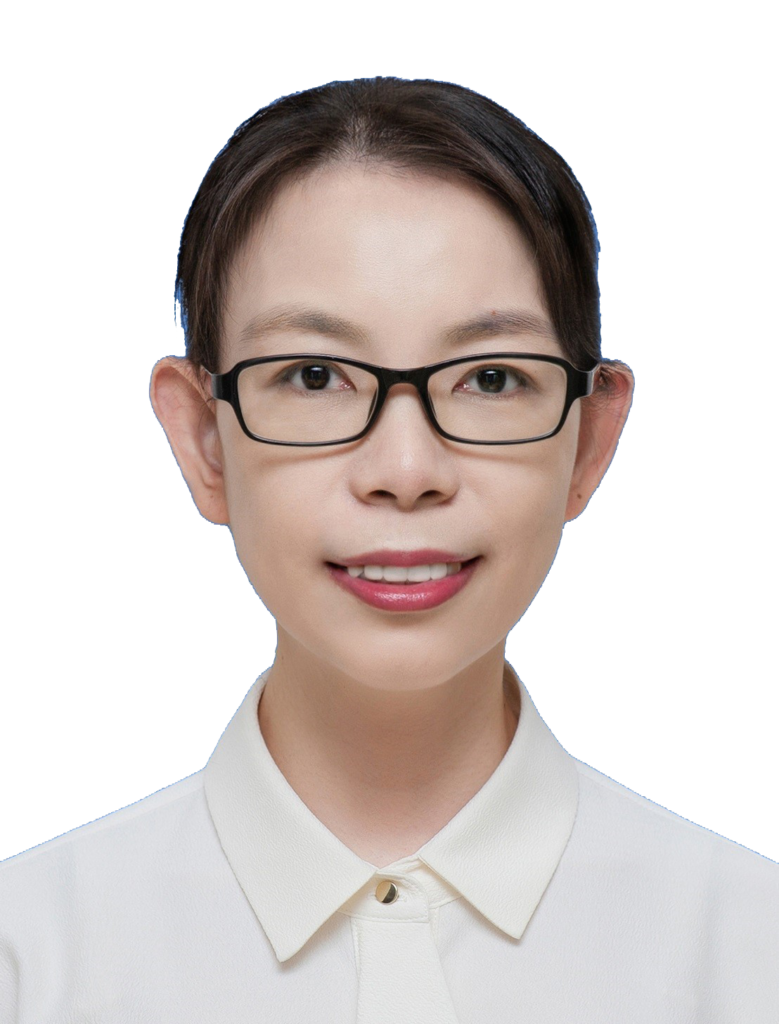
LOO CHIEN LING Manager, Chinese Programme Senior Educational Therapist & RETA Associate Member Plus Parkway Parade and Bishan Learning Centre
Hi everyone, this is Chien Ling, I am the Programme Manager for the Chinese Team and a Senior Educational Therapist. We are a group of Educational Therapists who love the Chinese language and are passionate about teaching. We believe that every child will grow to love Chinese, with the right support and environment.
Our team of Educational Therapists are trained in dyslexia and the provision of Chinese intervention to our learners. Each educational therapist would have undergone at least 60 hours of training in dyslexia and Chinese literacy support and advanced literacy skills as basic training. There is also a practicum component followed by continued mentoring by seniors on the team. Most of us also have at least a Postgraduate Certificate in Special Educational Needs.
We have developed a curriculum to support students with dyslexia from Primary 1 to Secondary 4. Our curriculum is carefully crafted according to Orton-Gillingham’s Principles to meet the needs of our students. We also engage the use of technologies to engage students in our lessons.
Wondering if our Chinese programme is suitable for your child? Find out through our in-house profiling test and engage with our friendly educational therapists about your concerns! All students are welcome to register, regardless of whether there is a formal diagnosis.
Date: 25 November 2026, Wednesday Time:
9am – 10am
10am – 11am
11am – 12pm
12pm – 1pm
Venue: DAS Bishan Learning Centre, Bishan Junction 8, 9 Bishan Place, #06-03, Singapore 579837 Fee: $57.25 (Non-refundable fee)
Do note that this is only for new enrollment into the Chinese Programme. The Chinese programme is offered at the following learning centres: Bishan, Toa Payoh, Henderson, Choa Chu Kang, Jurong Point, Parkway Parade, Tampines, Sengkang, Serangoon, and Yishun.
The profiling schedule is ONLY confirmed upon the receipt of your payment, please arrange to make payment as soon as possible. The profiling test is for class placement purposes only, no report will be given.
For Secondary students who are interested to enroll, kindly email us at [email protected] to check availability before application.
Register here
Please ensure you are signed in to your Google account to register. If you do not see the form, scroll down to sign in.
In our annual parent rating survey by parents, more than 80% of parents like yourself would rate that they are pleased or very pleased by the progress they see in their child. This is what they are saying:
“I feel that I can better understand the concepts taught at DAS and I find the word recognition stragtegies taught to be useful to help me recall the characters. ” 我觉得我能更好地理解DAS所教授的内容,而且我发现所教授的词汇识别策略对帮助我记忆字词很有用。
“Chinese subject focus more about building interest in the language, then followed by individual words before moving on to forming sentences and lastly paragraphs. The beauty of DAS is that the classes are smaller and the students are grouped according to their ability rather than level of studies in schools. It allows the teachers to be able to teach more effectively, targeting at areas of weaknesses.It directly builds a student’s confidence so that they won’t feel left out and will be more motivated to continue learning.” 到目前为止,华文课程更注重培养学生对语言的兴趣,然后逐步学习个别词汇,再进入构建句子,最后是段落的阶段。DAS的优势在于班级规模较小,学生根据他们的能力而不是学校的学习水平进行分组。这使得教师能够更有效地进行教学,针对学生的弱点进行有针对性的教学。这直接增强了学生的信心,使他们不会感到被忽视,并更有动力继续学习。
“The lessons have so far been encouraging to her. Chinese lessons have benefited my child from not speaking mandarin to make the effort to speak basic chinese and words used.” 到目前为止,她对课程感到鼓舞。华文课程让我的孩子从不说普通话到努力说一些基础的华文词汇,让我的孩子受益匪浅。
“Teacher’s pedagogical approach, her dedication to guide low ability students and her ability to notice the smallest details of my child’s learning.” 教师的教学法, 对能力较弱的学生的奉献也善于发现学生学习的细节
“With the Chinese Teacher’s guidance and encouragement, my child started to read up some simple articles and have some interest in watching Chinese dramas. Nowadays, she tries to converse with simple Chinese which she has feared in the past. We could see that she is very motivated to learn Chinese after taking up the Chinese program. We believe that with the constant guidance of the Chinese teachers, my child will make great progress in her Chinese language.”
在华语老师的辅导和鼓励下,我的孩子开始阅读一些简单的篇章,并对观看华语电视剧产生了一些兴趣。现在,她会尝试使用简单的中文交谈,这是她以前她所不敢尝试的。我们观察到,在报读中文课程后,她学习华语的积极性高。我们相信,在中文老师的不断指导下,我的孩子会在中文方面取得更大的进步。
Orthographic Awareness and its Relationship to Chinese Word Reading and Spelling in Young Bilingual Learners with Chinese Reading Difficulties in Singapore
Interested in our Chinese Semantic Radical Card Deck to help your child in word recognition? The Chinese Semantic Radical Card Deck is developed by DAS Academy in collaboration with the DAS Chinese curriculum team.
When students were not able to attend classes physically, we provided a Take Home Learning Package to ensure continual learning. There are also worksheets emailed to students to complete some activities. Below is a short clip from one of our packages:
Our Educational Therapists have adapted quickly to the pandemic and continue to support our students online whenever there is a need. Our resources are interactive and provide visual aids for students to learn effectively.
The Chinese Programme aims to help students become independent and curious learners of the Chinese language. The programme helps to increase the learner’s efficiency and interest in the Chinese language.
Our classes do not run parallel to the MOE syllabus. Instead, we focus on meeting each student’s individual needs by building strong foundations in listening, oracy, vocabulary, and word recognition—eventually progressing to more complex reading and writing tasks. While our primary Chinese programme teaching materials draw reference from the MOE curriculum, they are specially redesigned to reinforce these core skills.
At the secondary level, vocabulary is drawn directly from the MOE syllabus, while reading and writing skills are taught in alignment with it.
Chinese lessons at the DAS follows Orton-Gillingham principles in our delivery which has been shown to help dyslexics learn better. Ongoing research is also tied to the programme to measure the effectiveness in helping our students. The initial stages of findings have found significant improvement made for students on the programme.
Chinese Primary 1-hour programme: Maximum 5 students Chinese Primary 2-hour programme: Maximum 6 students Chinese Secondary Programme: Maximum of 8 students
Yes, a student can enrol in the programme even if he is exempted, so long as he has a diagnosis of Dyslexia and/or other Specific Learning Differences. However, priority will be given to students who are not exempted.
The programme currently does not offer one-to-one remediation under das Services. However, you may refer to our das International Specialist Tutoring to enquire more about one-to-one remediation in Chinese. See here for more information: Chinese Specialist Tutoring
Lessons are conducted at the following learning centres: Bishan, Serangoon, Sengkang, Jurong Point, Parkway Parade, Henderson, Tampines, Rex House, Choa Chua Kang
Currently, our primary school programme is 1 hour per week at all centres offering Chinese. For Primary 6 students, there is an option of attending a 2-hour programme, also at all centres offering Chinese. Our Secondary school programme is 2 hours per week.
The DAS Chinese programme does not offer any assessment or recommendation for exemption of Chinese. For more information on assessments, exemptions or access accommodations, please reach out to the SpLD Assessment Services (SAS) at 6444 5700, or email SAS at [email protected].
Hanyu Pinyin (HYPY) is not taught as a separate or standalone component of our programme. Instead, it is used as a support tool when introducing new Chinese characters and words, particularly to help students with pronunciation.
As our students may also be learning English phonics, we focus on using HYPY functionally within Chinese lessons rather than teaching it as a separate phonics system. This approach helps to minimise potential confusion between the two different sound systems.
Furthermore, as students progress to the upper primary levels, greater emphasis is placed on word recognition, which is one of the core components of our teaching. HYPY therefore serves primarily as a support for pronunciation, while students progressively develop their ability to recognise and read Chinese words directly.