Preschool Programme

Preschool Programme

For children in Kindergarten One and Two, developing early literacy skills is the key to access formal learning in Primary One.  

When one of these areas is weaker, reading and spelling does not “click” on its own.

Some children seem to pick up reading and spelling quickly, others face persistent challenges with alphabet knowledge, blending and segmenting, even after rounds and rounds of teaching. It is not because the child is not trying, or even trying hard enough.

This leaves parents wondering when it will finally “click”. How do we know if a Kindergarten 1 or 2 child requires specialised literacy support? 

It may show up in daily routines: 

At Home: You might observe your child having challenges to remember letter names, letter sounds, or guessing words even after attending phonics classes or learning it from school. 

At School: Teachers might give feedback that your child is working much harder just to “catch up,” or taking a significantly longer time to complete writing, reading and spelling tasks.

Instead of asking, “How long should we wait and monitor?”
We should start asking, “Will my child benefit from specialised literacy support?”

At the SES Preschool Programme, we do not see this as fixing a problem. We see it as building a stronger literacy foundation; early, intentionally, and effectively.

We provide them with specialised tools and strategies to unlock their potential, ensuring they step into Primary School as confident learners with a joy for learning. 

Teaching Approach

The SES Preschool Programme integrates the structured Orton-Gillingham (OG) instructional approach with early childhood pedagogy. Rather than rows of desks or children quietly copying from a board, our classroom is filled with learning in action through movement, touch, and play.

Our multisensory, sequential, and personalised lessons brings learning to life. Your child will be highly engaged and looks forward to class. 

Small Group, Big Impact

Classes are group according to literacy level and kept small, up to a size of 6 so every child gets the attention they need.
This allows teaching to be adjusted to each child’s pace and learning style.

To ensure a big impact, classes are kept small, up to a maximum of six children, and grouped by literacy level. This small group setting allows our Educational Therapists to monitor progress through ongoing formal and informal observations and literacy assessments throughout the year, ensuring that the pace, teaching approach, and style are continuously adjusted to your child’s unique learning profile.

A Strong Parent-Teacher Partnership

Learning does not stop in class. Parents are supported with simple strategies and activities to use at home: 

  • RAZ Kids reading app to promote shared reading and parent bonding 
  • Games to reinforce learned concepts at home 
  • Regular updates ensure you always know how your child is progressing.

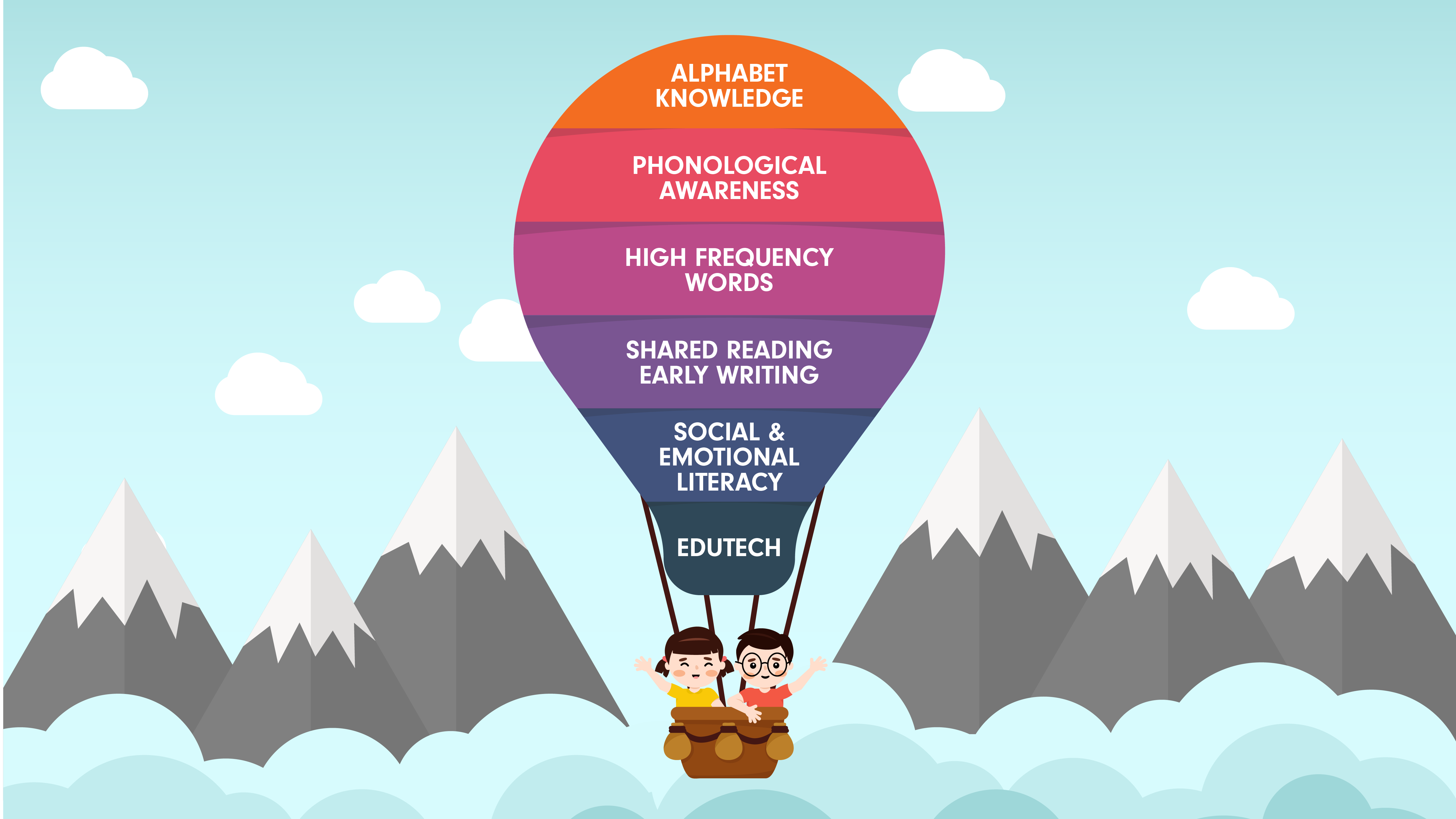
Components covered in a typical lesson:

  • Alphabet knowledge
  • Phonological Awareness
  • High-Frequency Words i,e the, on, a, is
  • Oracy, Shared Reading and Listening Comprehension
  • Fine Motor Skills, and Emergent Writing
  • Social & Emotional Literacy

Preschool Screening

This Online Preschool Screening helps identify preschoolers with reading, spelling, and writing difficulties, and whether specialised early literacy support may benefit them.

What to expect during screening:
1. A 30-minute session with a DAS Educational Therapist
2. Receive verbal feedback and guidance on the next steps
3. Looks at early reading, writing and sound awareness

Upcoming Screening Details
Date: 7 September 2026, Monday
Time: Choose a timeslot between 9.30 AM and 1.30 PM
Location: Online

Have more questions? You can email us at [email protected] or call 6444 5700 (Monday to Friday, 9.30 am to 5.30 pm)

Meet The Preschool Team

WENG YIYAO
Lead Educational Therapist
Programme Manager
RETA Associate Fellow
Jurong Point Learning Centre

Programme Manager

Yiyao is a Lead Educational Therapist and Preschool Programme Manager with the Dyslexia Association of Singapore (DAS). Since 2014, she has worked with preschoolers and school–aged students with dyslexia and other specific learning differences. She believes in empowering and equipping learners with the skills to overcome their challenges.

Rahayu Binte Rahiman

Jurong Point and
Chua Chu Kang
Learning Centre

Pauline Ng

Bishan and Woodlands
Learning Centre

Raihana Hashim

Parkway Parade and
Bedok Learning Centre

Shakthi Bavani

Sengkang
Learning Centre

Celia Tan

Woodlands and Toa Payoh Learning Centre

Denise Tan

Seng Kang and Tampines
Learning Centre

Jeannie Ko Chin Chin

Henderson
Learning Centre

Tan Shu Hong

Serangoon and Sengkang
Learning Centre

Joanne Tan Seok Kiang

Sengkang
Learning Centre

Roseline Marion

Sengkang
Learning Centre

Babe Chen

Tampines
Learning Centre

Kuah Li Fang

Yishun
Learning Centre

Testimonials

“Thank you teacher Pauline for the support given during this first term we have joined. My child enjoys the class and his looking forward to learning is something that we as parents are very touched about. He has shown more interest and more confidence in engaging in literacy activities and likes to read more with us now. Although not able to do it independently at moment, we look forward to the day he can! For that, we appreciate the efforts put in for term one to capture his attention and really get him engaged! Thank you so much! ”

“Ms Rahayu is truly a good educator, she not only helps my child to improve academically, but also pays attention to her learning needs. She bonded with my child, and allowed my child to learn and improve over the course of the program. I saw actual results under her guidance”

“Ms Sandra is a very encouraging and dedicated teacher. She has helped my child gain confidence in reading and writing and overcoming her barriers. She communicates clearly and timely which makes this a very collaborative relationship in helping my child to learn and grow.”

“Teacher Shu Hong has been a wonderful teacher who communicates well with parents, and gives a lot of thought to K’s individual struggles and progress. My child enjoys her classes and is always very happy to attend.”

“I would like to thank your teacher Roseline for her effort and patience in guiding my child for the last 3 years. English was a foreign language to my child since she spend most of the early years in another country. I can see that she had shown tremendous progress in her literacy and also her understanding of phonics."'

“I would like to thank teacher Babe for nurturing emotional awareness in my son Raphael. He really enjoyed her classes. He now knows some important words had to be remembered and can’t be sounded out. He looks forward to attending her classes.”

Media and Publications

Media Coverage

Bite-Sized Parenting: Tips On How To Raise A Confident Reader, From An Educational Therapist

https://www.littledayout.com/parenting-how-to-raise-a-confident-reader-educational-therapist/

Early Identification Of Children (targeting ages 5-6) At Risk Of Literacy Difficulties

https://www.kiasuparents.com/kiasu/article/early-identification-of-children-targeting-ages-5-6-at-risk-of-literacy-difficulties/

DAS Educational Therapist on reading techniques

https://www.supreme-parents.com/blog/blogart50

Research

Effectiveness of incorporating e-books in a literacy intervention programme to improve outcomes for early struggling readers

July 2023 – APJDD

Impact of preschool early literacy programme for struggling learners

July 2022 - APJDD

Investigating the impact of an early literacy intervention programme

October 2022 - IDA Conference

The Effectiveness of Family Literacy Programme with Preschoolers At Risk of Literacy Difficulties

October 2018 - IDA Conference

Evaluating an early literacy intervention in Singapore


Exploring the effectiveness of the Family Literacy Programme with Singaporean preschool children at risk of literacy difficulties

July 2018 - APJDD

Effectiveness of an early intervention programme for preschool children at risk of dyslexia in Singapore

January 2015 - AJPDD


Resources

Preschool Literacy Challenges Checklist

Alphabet Knowledge

Difficulty learning the letters or remembering the letters taught.

Recognises some letters but not most.

Writing the letters is laborious and may not remember how to write the strokes of most letters. Numerous consistent, Letter and number reversals

Phonological Awareness

Has not been able to acquire skills in identifying rhyming words, count syllables in words, match letter sound to letters, join or separate letter sounds in 3-letter words  i.e.  c-a-t

Word Recognition

Does not recognise high-frequency words despite being taught such as I, a, my, the

Difficulty with Learning Tasks

Remembering concepts taught

Take a long time to recall concepts taught

Frequent task avoidance

Emotional meltdowns during learning tasks

If more than 4 of the boxes are ticked, your preschooler is recommended to come for the free online basic literacy screening. Find out more here.

Have more questions? You can email us at [email protected] or call 6444 5700 (Monday to Friday, 9.30 am to 5.30 pm)

Frequently Asked Questions

Programme-related

You may scan the QR code or sign up at bit.ly/DAS-Preschool-Screening 

Our team will contact you according to the queue on our waitlist.

It is designed for K1 and K2 students who require specialised early literacy support. 

Common challenges encountered by the children in our programme include: 

  • not able to pick up phonics despite repeated exposure through enrichment, in school support 
  • struggle with naming letters 
  • struggle with letter formation 
  • struggles with blending/reading and segmenting/spelling
  • cannot recognise sight words despite repeated teaching 
  • have been referred by hospitals, psychologists, school teachers or other professionals

Components covered in a typical lesson are: 

  • letter recognition and formation 
  • letter-sound association 
  • blending/reading,
  • segmenting/spelling
  • sight word knowledge
  • During the first lesson, the Educational Therapist (EdT) will do a pre-test to determine the specific literacy goals. These goals are planned for a 6 month period and will be reviewed during Meet-The-Parent (MTP) session. 
  • These goals help EdT to plan lessons according to your child’s specific literacy needs. 
  • We teach according to your child’s pace (e.g., finding different ways to teach letter ‘a’ sound. Or reviewing the letter name and sound in another lesson if necessary.)
  • Classes are also hands-on, tapping into multisensory learning to reinforce what they learn in class. 
  • MTP sessions are conducted at the end of Term 2 and 4 to update you of child’s progress.

Yes. Their expertise and training cover fields such as Early Childhood Education, Special Educational Needs (SEN), and Specific Learning Differences (SpLD)

Our team is specifically experienced in supporting children who require specialised early literacy support.

No. We group their children according to their current literacy level. This ensures that your child is placed in a class that is most suited to his or her learning needs.

No, we accept K1 and K2 students who may require specialise literacy support to pick up early literacy skills.

You can arrange for a free preschool profiling. Our EdTs will address your concerns and advise if our programme will benefit your child. 

  • Our programme is designed to help K1 and K2 students to pick up essential early literacy skills such as letter sounds, blending/reading, segmenting/spelling, sight word knowledge. 
  • These are important foundation skills to have before the child enters Primary 1.

Fees and Financial Assistance


Weekday (Per Term)

Weekend (Per Term)

Singaporean 

$1,044.00 

$1,253.00

PR and International Students 

$1,150.00

$1,380 .00

Yes, financial assistance is available to low-income households. 

Class Size, Duration, Frequency, Timing

Lesson are 2 hours weekly, according to the MOE calendar. 

Please note there are no classes during Public Holiday or when your child is on MC or travelling.

One Educational Therapist to a maximum of six students in a class.

  • Weekday afternoon classes may start from 2.30pm and end by 7pm (e.g. 3pm – 5pm, 5pm to 7pm)
  • Weekend morning classes range from 9am to 1pm.  
  • There are limited weekend afternoon classes available.

Yes. We will try our best to find a class near your home that is most suitable for your child’s profile. In the event that a slot at your preferred learning centre is not available, we may recommend the next nearerst location to ensure your child can begin their support as soon as possible. 

Dyslexia Assessment

  • At the DAS, children below 6 years old are too young for a dyslexia assessment. 
  • To be eligible for a DAS Dyslexia Assessment, your child must meet two criteria:
  • Be at least 6 years old and have received 6 months of structured phonics intervention to be eligible for assessment
  • For children without any prior structured phonics intervention, it is recommended that he/she join the Preschool programme first.

Parent and Home Support

  • At the start of your child’s first lesson, the EdT will conduct a pre-test to find out the child’s strengths and weaknesses
  • An Individualised Intervention Plan (IIP) will be shared, outlining goals for usually a 6 months period. 
  • You may refer to the IIP or speak to our EdTs to find out about your child’s progress. 
  • DAS also conducts MTP sessions to keep parents updated on progress.
  • Resources such as RAZ Plus e-books, online games, activities will be shared with parents 
  • Parents can use these resources to reinforce what your child learns in class
  • Parents and guardians are advised to maintain open communication with our therapists to check in on progress

Others

The programme does not offer 1 to 1 support. You may refer to Specialist Teaching instead.

Have more questions? You can email us at [email protected] or call 6444 5700 (Monday to Friday, 9.30 am to 5.30 pm)