Written By Ong Yun Mei, Lead Educational Therapist, and Sophie Gao, Educational Therapist
What Are Wordless Picture Books?
Wordless picture books, as the name suggests, contain little to no text. Instead, they rely on illustrations to tell a story and convey emotions or meaning. For children, this creates a unique reading experience — they must observe a sequence of images to infer characters’ expressions, actions, settings, and story development. This process not only trains their observation skills but also allows them to use their imagination without being “limited” by words.
Why Are Wordless Books Great for students with dyslexia or struggling with Chinese?
For children with dyslexia, reading often comes with many challenges. They may confuse characters that look similar, struggle to connect sounds with written forms, and expend excessive effort on decoding words. This can lead to reduced comprehension, and in some cases, frustration and anxiety. For this reason, wordless picture books are particularly beneficial learning resources for students with dyslexia or those who face difficulties in learning Chinese.
Without the constraints of text, wordless books rely mainly on illustrations to convey information and tell stories. Students are not discouraged by limited vocabulary, decoding difficulties, or inadequate language skills. Instead, they can engage more confidently in the “reading” process, freely using their own words to describe what is happening in the pictures. This not only lightens the psychological burden of reading but also inspires them to express themselves actively.
For children with reading challenges, wordless books provide a relaxed, pressure-free reading environment that helps them gradually build language confidence and expressive ability. In the process, they strengthen their skills in observing details, reasoning logically, and organizing narratives, while also unleashing their imagination and creativity to assign their own interpretations and meanings to the visuals. Such an environment not only enhances self-confidence but also subtly supports vocabulary growth and improves fluency in both expression and reading.
For parents, reading wordless picture books with their children offers an excellent opportunity for meaningful parent-child interaction. By guiding children to tell stories, expand on their sentences, and adding in details, parents can effectively support their language development. Wordless picture books thus become an inclusive and multi-functional learning tool, enabling students to gradually build reading skills based on understanding meaning—truly embodying a natural path of acquisition “from images to language.”
Such experiences with wordless books are not only suitable for all children, but they also open a welcoming doorway into the world of language for children with different learning needs.
The Language of Pictures
Pictures themselves are a unique form of communication. Whether a picture book engages children often depends on its artistic choices:
- Composition: The size, placement, and use of space affect the visual impact.
- Proximity: The distance between characters can reveal relationships and emotions.
- Colour: Light and dark contrast, warm and cool tones, or even black-and-white can set different moods.
- Details: Hidden “easter eggs” invite children to observe carefully and feel rewarded when they notice something new.
These elements make reading a wordless book more than just “looking at pictures” — it becomes a layered and meaningful experience.
A Wonderful Example: Sector 7
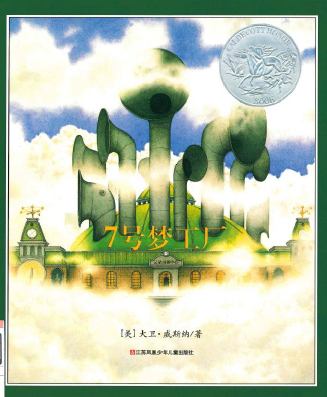
Sector 7 by American author David Wiesner is a classic example of a wordless picture book. The story follows a young boy visiting the Empire State Building in New York, where he meets a talking cloud.
The cloud invites him to visit “Sector 7,” a magical factory in the sky where clouds are shaped according to strict blueprints. Dissatisfied with their routine, the clouds long for change. Using his creativity and drawing skills, the boy designs imaginative new shapes for them. The storyline is simple yet seamlessly blends reality with fantasy, sparking endless imagination. The book cover resembles a movie poster, and even the opening endpapers drop subtle hints — only after finishing the story do children realize the hidden clues, bringing a delightful “aha!” moment.
Unique Storytelling Techniques in Sector 7
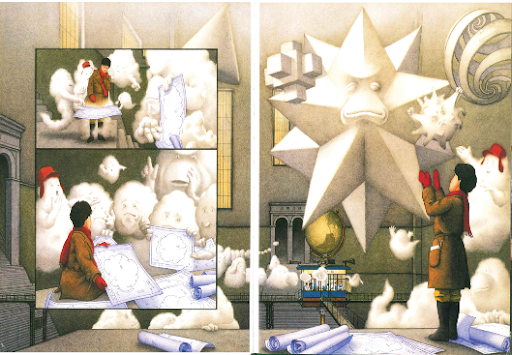
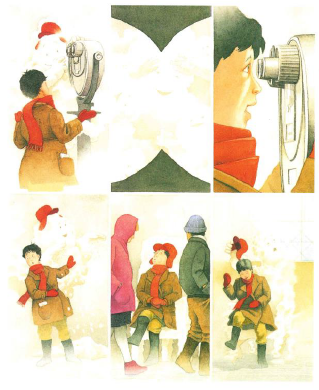
In Sector 7, Wiesner cleverly uses panel-like frames to tell the story. Each frame captures subtle changes in expressions and actions, like a film’s slow-motion shot, helping children focus on details.
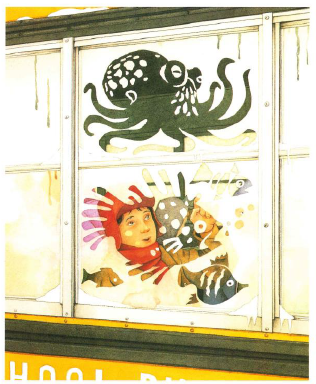
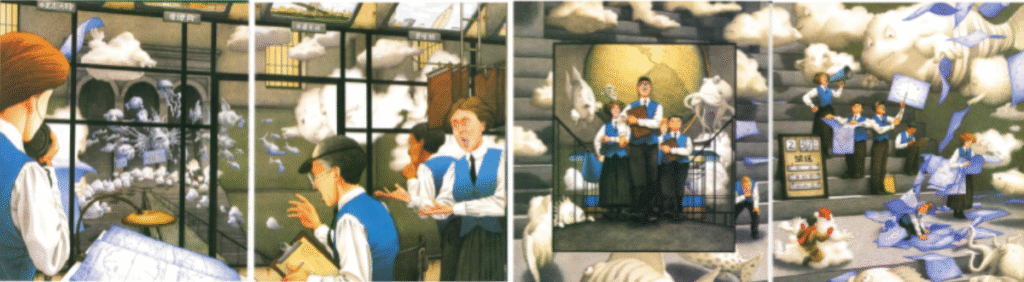
The book also employs sequential illustrations, where meaning unfolds across multiple pages. For instance, after the boy sketches sea creatures, the clouds transform into whales and dolphins, causing chaos. The administrator rushes out, trying to restore order. Children must infer the cause-and-effect relationship by connecting the illustrations.
Wiesner sometimes uses comic-strip style panels within a single page to show the beginning, middle, and end of an event.
For example, six panels on the right show: the cloud inviting the boy to look through a telescope; the boy peering through it; him spotting other clouds; and finally, both the boy and cloud smirking proudly after tricking some tourists. These storytelling techniques not only make the reading experience enjoyable but also teach children writing skills: how to use details to describe characters, and how to narrate a complete sequence of events.
How to Use Wordless Picture Books Effectively – A Practical Guide for Parents
When reading Sector 7 or other wordless picture books with your child, try these strategies to make the experience more engaging and meaningful.
Careful Observation
Look closely at each illustration with your child. Notice how the story develops, the relationships between characters, and the emotions being shown. Pay attention to facial expressions, actions, clothing, and background details. Give your child enough time to think, without rushing to answer for them.
Guided Description
For the first read, simply say, “Let’s tell this story together.” Then guide your child with increasingly deeper questions:
- Descriptive Questions: What do you see? Where is this happening?
- Inferential Questions: What do you think he is thinking? Why might he do that?
- Predictive Questions: What do you think will happen next?
- Relation to life experiences: If it were you, what would you do?
Tip: Repeat and expand your child’s response to model fuller descriptions.
Example:
Child: “These are giraffes.”
Parent: “Yes, their long necks help them reach the leaves on the tall trees.”
Use your imagination
Wordless books give children endless room for imagination. Encourage them to add their own ideas to make the story richer.
- Fill the Gaps: Ask your child to fill in what might have happened between two pictures.
- Change of Perspective: Retell the story from a different character’s point of view.
- Record Ideas: Write down your child’s oral stories and build their own “mini story collection.
Example:
Parent: “If the giraffes could talk, what would they say?”
Child: “They would say, ‘These leaves taste so good!’”
Parent: “Yes! Maybe they would even call their friends to join them.”
Active Interaction
Encourage your child to ask questions and share ideas. This interaction deepens understanding and sparks creativity.
Example:
Parent: “Do you have a question about this picture?”
Child: “Why is the boy hiding?”
Parent: “Good question! Why do you think he’s hiding?”
Child: “Because he’s playing a game.”
Parent: “Yes, maybe hide-and-seek! Can you think of other possibilities?”
Giving Positive Feedback
Your child does not need a “correct answer.” The goal is to help them feel confident expressing themselves. Positive feedback boosts confidence and makes storytelling more enjoyable.
Encouraging phrases:
“That is such an interesting idea!”
“I really like how you described that!”
In this way, a wordless picture book is not just a book, but a gentle and friendly doorway into the world of language for children with dyslexia. It becomes a bridge for you and your child to explore, create, and grow together.
Some Wordless Picture Books you may wish to check out:
- Flotsam – David Wiesner
A magical story about the sea and a mysterious camera, full of details to spark imagination. - Tuesday – David Wiesner
A humorous and whimsical tale of frogs flying through the night. - Sector 7 – David Wiesner
A boy visits a fantastical cloud factory, inspiring creativity and imagination. - The Arrival – Shaun Tan
A powerful immigrant story told through surreal illustrations, suited for older children. - Journey Trilogy – Aaron Becker
A child uses a red crayon to enter a magical world of adventure. - A Ball for Daisy – Chris Raschka
A simple yet emotional story of a dog and her favorite ball. - Chalk – Bill Thomson
Drawings come to life when children use magical chalk. - The Snowman – Raymond Briggs
A touching tale of a boy and his snowman’s adventure. - Good Dog, Carl – Alexandra Day
Gentle, playful adventures of a dog caring for a baby. - Zoom – Istvan Banyai
A clever visual narrative where each page zooms out to reveal a new perspective.
- Flotsam – David Wiesner
- Mirror, Wave, Shadow (The Border Trilogy)- Suzy Lee
Mirror, Wave, and Shadow — each explore a child’s boundless imagination through simple yet powerful visuals. In Mirror, a girl’s playful interaction with her reflection blurs the line between reality and fantasy. Wave captures the excitement and emotions of a child’s first encounter with the ocean. Shadow transforms ordinary light and darkness into a magical stage where imagination creates whole new worlds. Together, these stories invite readers to see the extraordinary in the everyday.
Click here to find out more about the DAS Chinese programme.

用图画讲故事:无字图画书的魅力
在孩子的成长过程中,书籍一直是重要的学习伙伴。但您知道吗?有一种特别的绘本,几乎没有文字,却能深深吸引孩子们的注意力——这就是无字图画书。
什么是无字图画书?
无字图画书,顾名思义,就是书中几乎没有文字,或者只用极少的文字来点缀。它们主要依靠图画来讲述故事,传达情感与意义。对孩子来说,这是一种非常独特的阅读体验——他们需要通过观察一连串的图像,去推测角色的表情、动作、故事的背景与发展。这种过程不仅锻炼了孩子的观察力,也让他们在没有文字的“限制”下,自由地发挥想象力。
为什么无字书特别适合有读写障碍或学习华文有困难的孩子?
对读写障碍的孩子来说,阅读往往伴随着许多挑战。他们可能会把形近字看混,难以在字音和字形之间建立联系,在解码文字时耗费大量精力,从而导致理解力下降,甚至产生挫败感与焦虑。因此无字书对于有读写障碍或学习华文存在困难的学生而言,是一种尤为有益的学习资源。
无字书没有文字限制,而是主要依靠图像来传递信息和叙述故事。学生不会因识字量有限、拼读困难或语言能力不足而产生挫败感,从而能够更自信地参与“阅读”过程。他们可以自由地使用自己的语言来描述图画中的情节,这不仅减轻了阅读的心理负担,也激发了他们主动表达的意愿。
对于有读写障碍的孩子来说,无字书提供了一个轻松、无压力的阅读环境,帮助他们逐步建立语言自信和表达能力。在这个过程中,学生不仅锻炼了观察图像、逻辑推理和故事组织的能力,还充分发挥想象力和创造力,尝试为视觉内容赋予属于自己的理解和意义。这种无压力的表达环境不仅能增强孩子的自信心,同时也在潜移默化中积累词汇,提升表达与阅读流畅度。
对家长来说,与孩子共读无字书更是一次高质量的亲子互动机会。通过引导孩子讲述故事、扩展句子和补充细节,家长可以有效支持孩子语言能力的发展。无字书因此成为一种包容性强、多效合一的学习工具,它使学生能够在理解意义的基础上逐步建立阅读能力,真正实现“从图像到语言”的自然习得路径。
这样的无字书体验,不仅适合所有孩子,更为有特殊语言学习需求的孩子打开了一扇通向语言世界的友好之门。
图画的语言
图画是一种独特的传意艺术。一本绘本能否吸引孩子,很大程度上取决于图画的构成:
- 构图:角色和物体的大小、位置、以及留白,都会影响画面的视觉效果。
- 距离:人物之间的远近变化,可以展现他们的关系与情感。
- 色彩:明暗对比、冷暖色调或黑白设计,都能传递出不同的氛围。
- 细节:常常藏着“彩蛋”,引导孩子细心观察,并在发现时收获惊喜。
正是这些元素,让无字书不只是“看画”,而是一场层次丰富的阅读体验。
一个精彩的例子:《7号梦工厂》
美国作家大卫·威尼斯的作品《7号梦工厂》就是一本典型的无字图画书。故事讲述一个小男孩在参观纽约帝国大厦时,遇到了一朵会说话的云。
云朵带着他参观天空中的“7号梦工厂”——一个制造云朵的地方。原本,云朵们必须按照严格的图纸被塑造成标准形状,但它们渴望变化。于是,小男孩发挥想象力和绘画才能,为云朵们设计出一个个奇妙又新颖的造型。故事情节简单,却在现实与幻想之间自由切换,既让孩子感到亲切,又能激发无限的想象力。书的封面宛如一张电影海报,开篇的环衬页埋下线索,而直到读完整本书,孩子们才会恍然大悟——原来故事的“秘密”早就藏在细节里。这样的安排,不仅增加了阅读的趣味性,也让孩子们体会到“细心观察”的重要性。
《7号梦工厂》的独特叙事方式
在《7号梦工厂》中,作者巧妙地运用了分割画面的方式来讲故事。通过一格一格的画面,我们能清楚看到人物表情和动作的细微变化。这样的安排,就像电影的慢镜头,帮助孩子在阅读时把注意力集中在细节上。
书中还运用了连续画面的手法,让读者能从多幅跨页图画中拼凑出完整的因果关系。例如,当小男孩画下海洋动物的图纸后,云朵真的变成了鲸鱼和海豚。这时,管理员慌张地从控制室冲出来,想办法平息混乱。这样的情节并没有用文字明说,而是需要孩子通过观察前后两幅画面去联想,补全故事逻辑。
有时,作者甚至会在同一页里用类似漫画格的小图来展现一个事件的起因、经过和结果。左上角显示小白云邀请小男孩去看望远镜;右上角画的是小男孩正在用望远镜观察;中间的画面揭示了结果——他看见了远处的云朵。而下方一组画,则描绘了小男孩和云因为成功捉弄了游客而露出得意洋洋的神情。
通过这样的叙事方式,孩子们不仅能享受故事,还能从中学习写作技巧:如何用细节来描写人物,如何完整交代一个事件的起因、经过和结果。
如何有效地使用无字书?
在陪孩子阅读《7号梦工厂》或其他无字图画书时,您可以尝试以下方法,让阅读更有趣:
- 细心观察
带孩子一起仔细观察每一幅图,理解故事的情节发展、人物关系以及情感变化。同时,注意人物的表情、动作、服饰及人物所处的场景。最重要的是,给与孩子足够的思考时间,不要急于替他们回答。
小游戏建议:玩“图像侦探”——和孩子一起猜人物当下的心情或想法。
- 引导描述
第一次阅读时, 只需简单描述:“让我们一起来说说这个故事”。
- 用易到难的问题引导孩子思考,:
- 描述性问题:“你在这幅图里看到了什么?”“这是在哪里?“
- 推理性问题:“你觉得他在想什么?” “为什么他会这样做?”
- 预测性问题:“你觉得接下来会发生什么?
- 联系实际:“如果是你, 你会怎么办?“
同时,可以重复并扩展孩子的回答,让他们的表达更完整。
例如:孩子说“这是一群长颈鹿。” 家长可以补充:“是的,它们脖子长长的,正在吃树上的叶子。”
- 发挥想象力
无字书提供了一个开放的故事情节,可以极大激发孩子的创造力和想象力。孩子可以根据自己的理解,加入想象和创造,让故事更加有趣:
- 连环画补白:请孩子讲讲“上一格”和“下一格”之间可能发生了什么。
- 换角度讲故事:试试用不同角色的视角讲故事,比如让“云朵”来说说它的冒险经历。
- 记录创意:把孩子口头讲的故事写下来,积累成属于他们的“小故事集”。
亲子互动示例:
家长:“如果长颈鹿会说话,它们会说什么呢?”
孩子:“它们会说‘这些树叶真好吃!’”
家长:“是的!也许它们还会叫朋友一起来吃呢。”
- 积极互动
鼓励孩子提出问题、分享想法。这样积极互动不仅可以帮助孩子更好地理解故事,还可以激发更多的灵感。
示例对话:
家长:“你对这张图有问题吗?”
孩子:“为什么这个男孩要躲起来?”
家长:“好问题!你觉得他为什么要躲呢?”
孩子:“因为他在玩游戏。”
家长:“对,也许是在玩捉迷藏!你觉得还有别的可能吗?”
- 及时反馈
鼓励孩子勇于表达,不怕出错;动动脑筋,大胆去创造故事。善用“我觉得你这个想法很有趣!“我喜欢你这样的描述!”这样鼓励性的语言,激发孩子的表达欲和创造性思维。
这样一来,无字图画书不仅仅是一本书,更是为读写障碍孩子打开通向语言世界的一扇温和而友善的大门,成为您和孩子一起探索、创造和成长的桥梁。
推荐的无字书书单:
- 《海底来的秘密》 – 大卫·威斯纳 (David Wiesner, Flotsam)
一个关于大海和相机的奇幻故事,细节丰富,适合培养观察力与想象力。 - 《星期二》 – 大卫·威斯纳 (David Wiesner, Tuesday)
青蛙们在星期二晚上飞天冒险的故事,充满幽默和幻想。 - 《7号梦工厂》 – 大卫·威斯纳 (David Wiesner, Sector 7)
描绘云朵工厂的奇妙旅程,非常能激发孩子的创造力。 - 《抵岸》 – 谢恩·谭 (Shaun Tan, The Arrival)
用超现实插图表现移民的经历,适合高年级学生,主题深刻。 - 《不可思议的旅程》三部曲 – 亚伦·贝克尔 (Aaron Becker, Journey Trilogy)
孩子用一支红笔打开奇幻世界的大门,展开冒险。 - 《黛西的球》 – 克里斯·拉施卡 (Chris Raschka, A Ball for Daisy)
一个关于狗和它最喜欢的球的温馨故事。 - 《不可思议的粉笔》 – 比尔·汤姆森 (Bill Thomson, Chalk)
孩子们画下的图案都会变成真实,画风写实。 - 《雪人》 – 雷蒙德·布里格斯 (Raymond Briggs, The Snowman)
小男孩和雪人的奇妙冒险,充满温情。 - 《好狗卡尔》 – 亚历山德拉·戴 (Alexandra Day, Good Dog, Carl)
大狗卡尔带着小宝宝经历各种冒险,温馨有趣。 - 《变焦》 – 伊斯特万·巴尼亚伊(Istvan Banyai, Zoom)
通过镜头不断拉远,展示完全不同的视角,特别适合培养观察力。 - 《镜子》、《海浪》、《影子》 – 蘇西・李 (Suzy Lee, Mirror, Wave, Shadow)
蘇西・李的无字图画书《镜子》《海浪》和《影子》通过简洁而富有张力的画面,展现了孩子无边的想象力。《镜子》中,小女孩与镜中倒影的互动模糊了现实与幻想的界线;《海浪》描绘了孩子初次面对大海时的兴奋与情感起伏;《影子》则将灯光与黑暗变成奇妙的舞台,让想象力创造出全新的世界。这三本书共同引导读者在日常中发现非凡之处。
点击这里了解更多关于DAS华文课程的信息。