
The Power of Play: How Fun and Games Build Brains for Reading

Parents are eager to give their children the best start in literacy. Many might think of flashcards, ABC drills, or letter writing. But did you know that play is one of the most effective tools for building your child’s literacy?

All those giggles, imaginative adventures, and block tower constructions are actually laying the foundation for reading and writing. Often, these playful activities build skills that flashcards and worksheets simply can’t achieve.

How Play Builds Your Child’s Reading Brain

Play is a child’s natural way of exploring the world and developing essential cognitive skills linked to literacy:

  • Vocabulary Expansion – When your child engages in imaginative play, whether pretending to be a chef, a doctor, or a superhero, they are constantly using and encountering new words. They describe actions, roles, and objects. By doing so, they expand their vocabulary.
  • Narrative Skills – Every imaginative play scenario has a beginning, middle, and end, with characters and a plot. This is the essence of storytelling. As your child creates these narratives, they develop comprehension and sequencing skills that are crucial for understanding stories.
  • Problem-Solving and Critical Thinking – Building with blocks, solving puzzles, or figuring out how to make a doll’s house work requires problem-solving. These same skills apply to reading comprehension, where your child must infer, predict, and analyse information.
  • Phonological Awareness – Simple games like “I Spy”, rhyming games, or singing silly songs help your child tune into the sounds within words. This sound awareness is key to recognising the sounds in spoken language.
  • Fine Motor Skills – Activities such as cutting, threading beads, or manipulating playdough strengthen the small muscles in their hands. These muscles are essential for holding a pencil and writing letters.
  • Engagement and Confidence – For some children, traditional learning can feel overwhelming. Play makes learning joyful and less pressured, helping to build a positive association with literacy and boost confidence. When learning is fun, children are naturally more motivated to engage and explore.
Bringing Literacy-Rich Play Home

You don’t need expensive toys or elaborate setups to make play a powerful literacy tool. Here are some simple ways to bring literacy-rich play into your daily life:

  • Be a Play Partner
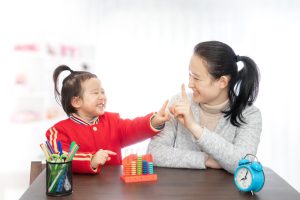
    Join in! Ask open-ended questions during play such as, “What happens next?” or “How will the bear get home?” offer new vocabulary words related to their play theme.
  • Encourage Pretend Play
    Provide props like old clothes for dress-up, kitchen utensils, or toy tools. Let their imagination lead the way.
  • Play Sound Games
    Sing rhyming songs, play “I Spy” with sounds (for example, “I spy with my little eye something that starts with /b/ like ‘ball’”), or clap out syllables in names (such as two claps for the word rabbit).
  • Engage with Board Games and Puzzles
    These often involve turn-taking, following instructions, and recognising patterns, all of which are important for cognitive development.
  • Get Creative
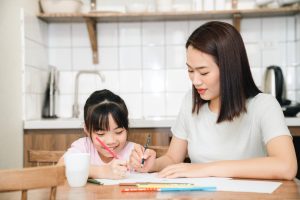
    Offer paper, crayons, playdough, and other writing materials. Encourage your child to draw stories, create “maps” for their adventures, or form letters.

Our preschool programmes harness the power of play because we understand that it is how young children naturally learn. Our learning environments are filled with opportunities for exploration, discovery, and the joyful development of foundational skills.

The next time your child is lost in a world of make-believe or excitedly stacking blocks, remember that they are engaged in meaningful learning. They are building the foundation for a lifelong love of reading and learning.

If you are keen to find out more about our Preschool Programme, click here.

Weng Yiyao
DAS Preschool Programme Manager and Lead Educational Therapist

About The Author

Weng Yiyao is the Lead Educational Therapist and Preschool Programme Manager at the Dyslexia Association of Singapore (DAS). With over a decade of experience, she specialises in supporting preschoolers with dyslexia through targeted literacy interventions. Passionate about empowering young learners, Yiyao is also a fellow of the Register of Educational Therapists Asia (RETA) and holds a Master of Arts in Special Educational Needs.