Written by Hu Ying,
Chinese Educational Therapist
学生的情绪状态对学习效果的影响是非常大的。
有注意力缺陷的孩子在常规的课堂上很难保持专注,容易分心,习惯拖延逃避。有情绪障碍的孩子很难控制自己的情绪,容易焦虑不安,也容易受外界的影响,总是伤感或自卑。
平日教学中,我时常会遇到一些在情绪调节上面临挑战的孩子。他们心思敏感,有时候会忍不住发出声音或打扰同桌,试图以此缓解不安或寻求关注;有些学生面对陌生人极其害羞,不敢开口讲话;有些学生像“炮仗”,一“惹”就怒。一堂华文课一个小时,学生可能还沉浸在自己的情绪中,就已经下课了……
今天,来谈谈如何应用情绪调节教学模式,调动有特殊需求学习者的学习主动性,激发学习兴趣,并逐步帮助他们建立信心,以确保华文课程的有效性,提升学生的学习效果
一、什么是情绪调节教学模式?
情绪调节教学模式的理论基础源于人本主义心理学和情绪心理学。心理学家康布斯(Combs)主张,教育的目的绝不只限于教学生知识或谋生技能,更重要的是要注意满足学生的情感需求,使他们能在认知和情感方面均衡发展,从而培养健全人格。他提出要让学生在知识、情感、意志三方面均衡发展,这被称为全人教育思想(The holistic education philosophy)。
教育学家郭德俊提出情绪调节教学模式指的是,教师通过调节和管理学生的情绪,引发课堂中学生的主要情绪对教学活动的积极作用,为学生的学习提供最佳情绪状态,从而调动学生学习的积极性,以确保教学目标的完成,提高课堂有效性。
二、了解课堂情绪类型及教学中的情绪调节过程
课堂上几种主要情绪类型包括:好奇、愉快、焦虑和兴趣。其中焦虑情绪是影响语言学习的重要因素之一。造成学生语言焦虑的因素有很多:口头和书面表达任务、考试成绩、在语言学习中产生的自尊心和自信心等都会引发学生的焦虑感。
研究发现,当学生处在一个恰当的焦虑水平时,他的学习表现和学习效果是最佳的。因此,在华文课堂上进行情绪调节,对于学习华文至关重要。
在整个教学过程中,教师需要创设情境,引发学生的学习兴趣;设定一个学习目标,刺激学生的焦虑感和好奇心;引发学生探究,解释疑惑的心理状态;诱导学生进行思维和学习的创新;最后,给出正面积极的反馈评价。教师也需要观察学生的个人特征,对于不同学生,不同情绪反应出不同的调节模式。
教师在调节学生的情绪过程中,要引发学生的新奇感,愉快感和适度焦虑感,最终获得学习成功感。学生在学习过程中会产生一个良好的生理反应和主观体验,表现出爱上学习,享受学习,并在学习中体现个人价值。
三、华文课堂上的情绪调节策略
策略一:引发“好奇与兴趣”——让学习贴近生活
课堂应该呈现新颖、奇特的刺激,教师根据学生的兴趣来设计教学活动,包括游戏、表演等。学生能够参与,并实现师生互动和生生互动。教师也应该注意言语幽默,并经常改变刺激呈现的方式以及教学方式,引起学生的好奇感和兴趣。
DAS华文课程每堂课会根据学生能力选择不同的主题,设置相关的语言基础教学和语言技能及应用活动。
教师会根据学生的兴趣点和关注点,播放图片、视频引起学生的学习兴趣,帮助学生更好的理解,举例的时候也会选择学生熟悉的人物或内容贴近学生生活。
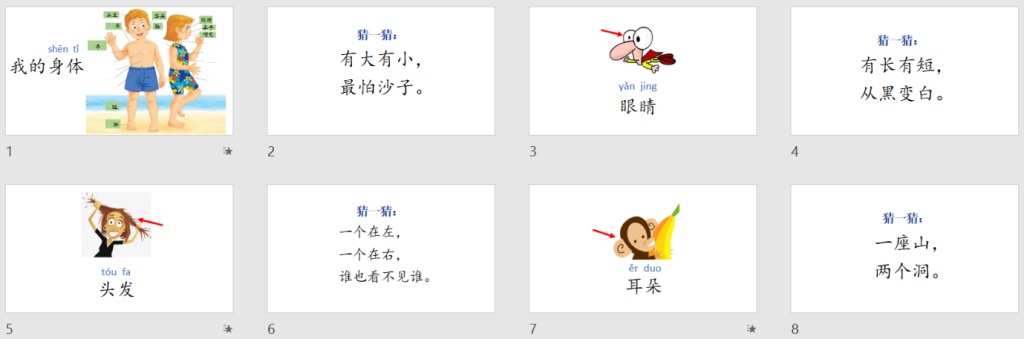
“请大家猜一个身体部位:有大有小!最怕沙子!”
“是眼睛!”……
利用学生们喜欢的猜谜游戏来引出学习主题“身体部位”,可以激发学生的学习兴趣,提高学生的参与性,增添课堂趣味。
一个能力非常弱的学生在完成指定的造句活动后向我提出:老师,我还想再造一个自己的句子!你可以帮帮我吗?
事实证明,学生对于他感兴趣的活动,就算再难,也是愿意去尝试的!
策略2:制造“愉快与成就感”——实施差异化教学
情绪心理学家鲍威尔(Bower)经过研究发现,人在愉快的情绪下学习和记忆知识的效率远高于在悲伤的情绪下。换言之,人的情绪与学习效果紧密相关。
教师设计的教学任务一定是学生经过努力可以完成的,并能根据学生能力不同布置差异化的学习任务,使学生体验成功感。对于学生的进步,教师需要及时反馈,给与肯定和鼓励,激发学生的求知欲和满足感。
针对能力不同的学生,DAS华文课程会设置不同的活动任务和要求,提供差异化的活动纸,教师也会给每一个学生适当的帮助和支持,确保学生有能力完成学习任务并逐步获得提高。
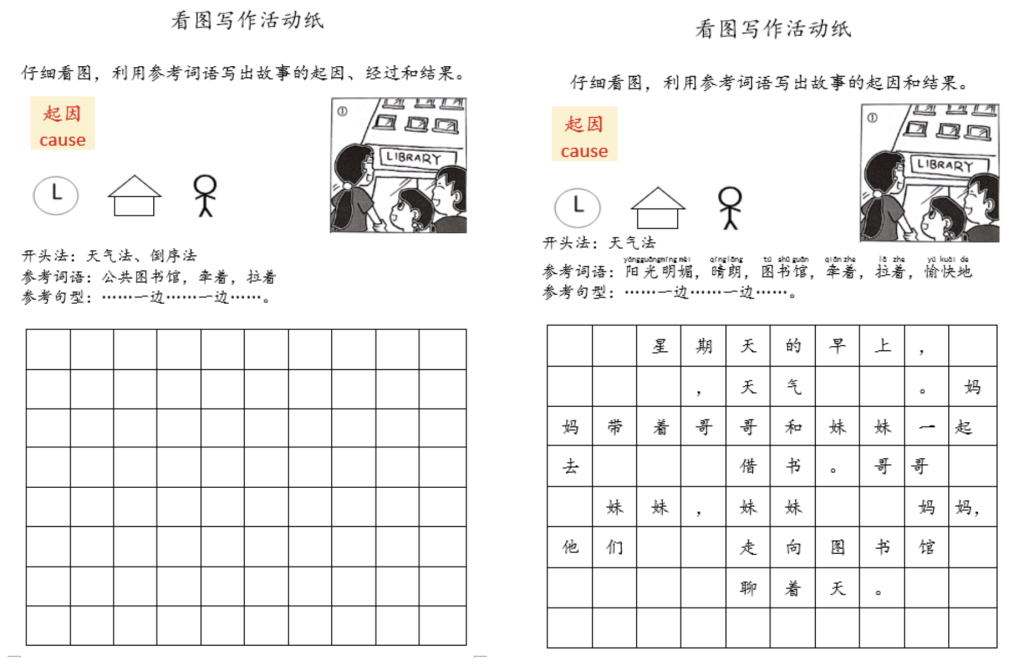
例如看图写作活动,对于能力强的学生,活动纸只需要提供关键词和参考句型,他们能够独立写出故事的起因、经过和结果,而针对能力较弱的学生,活动纸上会提供写作的模板,学生可以利用所提供的参考词语和句型来完成填空式段落写作。
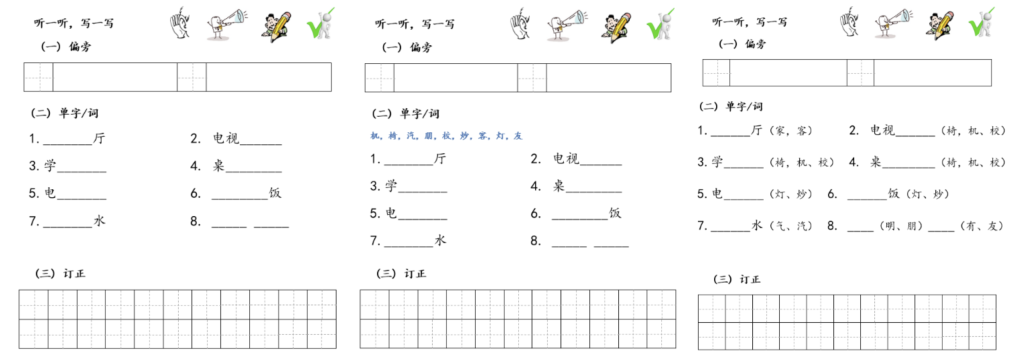
课堂上常常有能力差异很大的学生,教师要避免进行比较,给与适当、积极的评价和反馈。听写课上,我会根据不同能力的学生提供不一样支持的听写活动纸:能力强的学生,要求独立写出整个词语,能力中等的学生,会提供帮助字,让学生选择填写,而对于能力弱的学生,他只需要找到正确的目标字,然后圈出来即可。
每个学生都能够在学习中体验到成就感和愉悦感。昨天,就有学生拿着他满分的听写纸自豪地跟我说:老师,我想把听写纸带回家给我妈妈看!
策略3:接纳与化解“焦虑”——允许犯错,建立安全感
心理学家罗杰斯(Rogers)曾提出,人天生就有学习的自觉性,当人们认识到自身和学习的关系后,在一个没有威胁的环境下,人们就会开启一个自我的学习机制。
也就是说,如果教师在跟学生的相处和交流中,能够体现出对于学生的宽容、谅解和体贴,那么学生就会取得一个更好的学习效果。
教师需要帮助学生降低过高焦虑。对于课堂表现不理想的学生,要表示理解,多给与鼓励和支持。承认错误是学习中的一部分,允许学生犯错,支持改正错误。
在课堂上我最常给学生们讲的一句话就是:大声讲!不要害怕读错、写错!老师最喜欢你们“犯错”,正因为这些错误,我们才能改进。如果大家都会,就不需要来上课了。
我有一个学生,她患有语言发育迟缓,在课堂上跟读词语、句子的时候,常常会发音不准,咬字不清晰。刚开始她每次开口,同学们都会笑话她,她自己也没什么信心,不敢发声。我告诉她:没关系,你读的华文比胡老师读的英文好听多了!
我让她观察我的嘴型,留意舌位唇形,并逐字逐词的教她读。慢慢地,她从只能读一个词语变成能够跟读一个短语或一个简单的句子,声音也越来越大,充满自信。因为她的自信和进步,现在没人再笑话她的发音了。
在我不断的肯定和鼓励下,她现在经常在课堂上发问,也喜欢跟大家分享,积极参与课堂活动。
四、与家长朋友们互勉
陪伴有特殊需求的孩子学习是一个漫长、艰辛,充满挑战的过程,但同时,也是幸福难忘,收获满满的!
看到孩子们一点点的进步,每一道求知的目光,每一个自信的眼神,每一丝灿烂的笑容……都会让我们在陪伴成长和学习的道路上更加坚定和充满能量!
DAS华文课程希望和所有家长朋友们一起见证我们的孩子,能够克服自身不足,不惧困难,重拾自信,坚韧自强,成为积极健康、快乐独立的母语学习者!
A student’s emotional state can have a profound impact on how well they learn.
Children with attention difficulties often struggle to remain focused in a conventional classroom. They are easily distracted and may develop a habit of procrastinating or avoiding tasks. Children with emotional difficulties may find it hard to regulate their feelings. They may become anxious or unsettled, be easily affected by what happens around them, and frequently experience sadness or low self-esteem.
In my day-to-day teaching, I often meet children who face challenges with emotional regulation. Some are highly sensitive and may make noises or disturb the class because they are trying to ease their anxiety or seek attention. Some are extremely shy around unfamiliar people and are afraid to speak. Others are like “firecrackers”—the slightest spark can set them off.
A Chinese lesson lasts only an hour. Sometimes, by the time a student has begun to work through their emotions, the lesson is already over.
Today, I would like to explore how an emotion-regulated teaching approach can encourage learners with special educational needs to take a more active role in learning, develop an interest in Chinese, and gradually build their confidence. By responding to students’ emotional needs, we can make Chinese lessons more effective and improve their overall learning outcomes.
1. What Is Emotion-Regulated Teaching?
Emotion-regulated teaching is grounded in humanistic psychology and the psychology of emotion.
Psychologist Arthur Combs believed that education should never be limited to teaching knowledge or preparing students to earn a living. More importantly, education must address students’ emotional needs and support balanced cognitive and emotional development, enabling them to grow into well-rounded individuals.
He advocated for the balanced development of knowledge, emotions and will. This forms part of what is known as the holistic education philosophy.
Educator Guo Dejun describes emotion-regulated teaching as an approach in which teachers guide and manage students’ emotions so that their emotional responses can contribute positively to classroom learning. By creating an emotional state that is conducive to learning, teachers can motivate students, support the achievement of learning objectives and improve the effectiveness of their lessons.
2. Understanding Classroom Emotions and the Regulation Process
Some of the main emotions experienced in the classroom include curiosity, enjoyment, anxiety and interest.
Among these, anxiety is an important factor affecting language learning. Students may experience language anxiety for many reasons, including oral and written tasks, examination results, and concerns surrounding their confidence and self-esteem as language learners.
Research has found that students tend to perform and learn best when they experience an appropriate level of anxiety. This means that emotional regulation plays an especially important role in the Chinese classroom.
Throughout the teaching process, teachers need to create situations that capture students’ interest. They can introduce a learning goal that generates curiosity and an appropriate sense of challenge, encourage students to explore and resolve their doubts, guide them towards creative thinking and learning, and finally provide positive and constructive feedback.
Teachers must also observe each student’s individual characteristics. Different students respond to emotions in different ways and therefore require different forms of support.
Through this process, teachers can cultivate a sense of novelty, enjoyment and moderate challenge before helping students experience the satisfaction of succeeding. When students develop positive physical and emotional responses to learning, they are more likely to enjoy the process, develop a love for learning and recognise their own value through it.
3. Emotional Regulation Strategies in the Chinese Classroom
Strategy 1: Spark Curiosity and Interest by Connecting Learning to Everyday Life

The classroom should offer students fresh and engaging experiences. Teachers can design activities around students’ interests, incorporating games, performances and other interactive elements. This gives students opportunities to participate, interact with the teacher and learn alongside their classmates.
Teachers can also use humour and vary the way content and activities are presented to sustain students’ curiosity and interest.
In the DAS Chinese Programme, the theme of each lesson is selected according to the students’ abilities. Lessons combine foundational language instruction with activities that develop practical language skills and application.
Teachers use images and videos related to students’ interests to capture their attention and help them understand the lesson more easily. When giving examples, we also refer to familiar people, situations and topics so that learning feels relevant to their everyday lives.
For example:
“Can you guess this body part? It can be big or small, and it is most afraid of sand!”
“Your eyes!”
Using a riddle that students enjoy is a simple and lively way to introduce the topic of body parts. It sparks their interest, encourages participation and makes the lesson more enjoyable.
After completing an assigned sentence-writing activity, one student who found Chinese particularly challenging approached me and said:
“Teacher, I want to make another sentence of my own! Can you help me?”
This showed me something important: when students are genuinely interested in an activity, they are willing to try even when it is difficult.
Strategy 2: Create Enjoyment and a Sense of Achievement Through Differentiated Teaching
Emotion psychologist Gordon Bower found that people learn and remember information much more effectively when they are happy than when they are sad. In other words, our emotions and our ability to learn are closely connected.
The learning tasks designed by teachers should be achievable with effort. Teachers should also differentiate these tasks according to students’ abilities so that every learner has the opportunity to experience success.
When students make progress, teachers need to respond promptly with recognition and encouragement. Positive feedback can strengthen students’ desire to learn and deepen their sense of satisfaction.
In the DAS Chinese Programme, students receive different activities, expectations and worksheets according to their abilities. Teachers also provide each student with an appropriate level of guidance and support. This ensures that students can complete their learning tasks while gradually developing their skills.
For example, during a picture composition activity, a more proficient student may receive only keywords and suggested sentence structures. From these prompts, the student can independently write the beginning, development and conclusion of the story.
A student who requires greater support may receive a structured writing template instead. Using the vocabulary and sentence patterns provided, the student can complete a paragraph by filling in the blanks.
Students in the same class may have very different levels of ability. Teachers should avoid comparing them and instead provide each child with appropriate, constructive and encouraging feedback.
During spelling exercises, I prepare worksheets with different levels of support. More proficient students are expected to write the complete words independently. Students who require moderate support may be given several Chinese characters from which to select the correct answer. Those who need more assistance may simply be asked to identify and circle the target character.
In this way, every student can experience the joy and satisfaction of achieving something through learning.
Just yesterday, a student proudly held up his spelling paper, on which he had received full marks, and told me:
“Teacher, I want to bring this home and show my mother!”
Strategy 3: Accept and Ease Anxiety by Allowing Mistakes and Creating a Safe Learning Environment
Psychologist Carl Rogers believed that people possess an innate desire to learn. When they recognise the relevance of learning to themselves and feel that they are in an environment free from threat, their natural capacity for learning can emerge.
In other words, students are likely to learn more effectively when teachers treat them with patience, understanding and consideration.
Teachers need to help students manage excessive anxiety. When a student’s classroom performance falls short of expectations, we should respond with understanding and offer additional encouragement and support.
Mistakes are a natural part of learning. Students must be allowed to make them and supported as they learn how to correct them.
One of the things I say most frequently in class is:
“Speak loudly! Don’t be afraid of reading or writing something incorrectly. I love it when you make mistakes because they show us what we can improve. If everyone already knew everything, there would be no need to come to class!”
One of my students has a language development delay. When repeating Chinese words and sentences in class, she often found it difficult to pronounce them accurately or articulate them clearly.
At first, whenever she tried to speak, her classmates would laugh at her. She gradually lost confidence and became afraid to use her voice.
I told her:
“It’s all right. Your Chinese sounds much better than Teacher Hu’s English!”
I encouraged her to observe the shape of my mouth and pay attention to the position of my tongue and lips. Then, I guided her patiently, one character and one word at a time.
Gradually, she progressed from being able to repeat only a single word to reading a short phrase or a simple sentence. Her voice grew louder, and she became increasingly confident.
Today, because of the confidence she has developed and the progress she has made, no one laughs at her pronunciation anymore.
With continued reassurance and encouragement, she now frequently asks questions in class. She enjoys sharing her thoughts with everyone and actively participates in classroom activities.
4. A Message of Encouragement to Parents
Supporting a child with special educational needs through their learning journey can be long, difficult and filled with challenges. At the same time, it can also be joyful, unforgettable and deeply rewarding.
When we witness a child making progress little by little, every curious gaze, every confident expression and every bright smile, we become more determined and energised as we continue walking alongside them on their journey of growth and learning.
Through the DAS Chinese Programme, we hope to join parents in witnessing our children overcome their challenges, face difficulties with courage, rediscover their confidence and grow in resilience and independence.
Together, we hope to nurture positive, healthy and happy learners who can engage with their mother tongue confidently and independently.