
When a child struggles with a spelling list or reading activity from school, our first instinct may be to give them more practice. We might buy assessment books, sign them up for another phonics or English enrichment class, or encourage them to read more at home.
But when a child processes language differently, simply adding more lessons and worksheets may not help the learning stick.
If a preschooler has difficulty understanding the relationship between letters and sounds, repeatedly practising the same activities can lead to frustration instead of progress. Over time, they may begin to dread paper-and-pencil activities, avoid reading tasks or believe that they are simply “not good” at learning.
At DAS Preschool, we first identify their strengths and the specific areas in which they need support. Does the child struggle to recognise letter sounds? Do they find it difficult to blend sounds into words? How can we use their interests and strengths to make learning more meaningful and engaging?
Through multisensory teaching, children learn using games, movement, touch and other hands-on activities. This helps them develop important early literacy skills, including phonological awareness and a stronger understanding of how letters and sounds work together.
With the right foundation and targeted support, children can become more willing to participate in reading and spelling activities, and approach learning with greater confidence.
DAS offers free online preschool screenings for K1 and K2 children. These screenings help determine whether:
• Your child is meeting expected literacy milestones
• There may be early learning gaps
• Your child could benefit from the DAS Preschool Programme
Register for Preschool Screening now!
Click here to find out more about the Preschool Programme.
Download the Parent Checklist to understand your child’s development.
Looking for Guidance on Your Child’s Reading Journey?
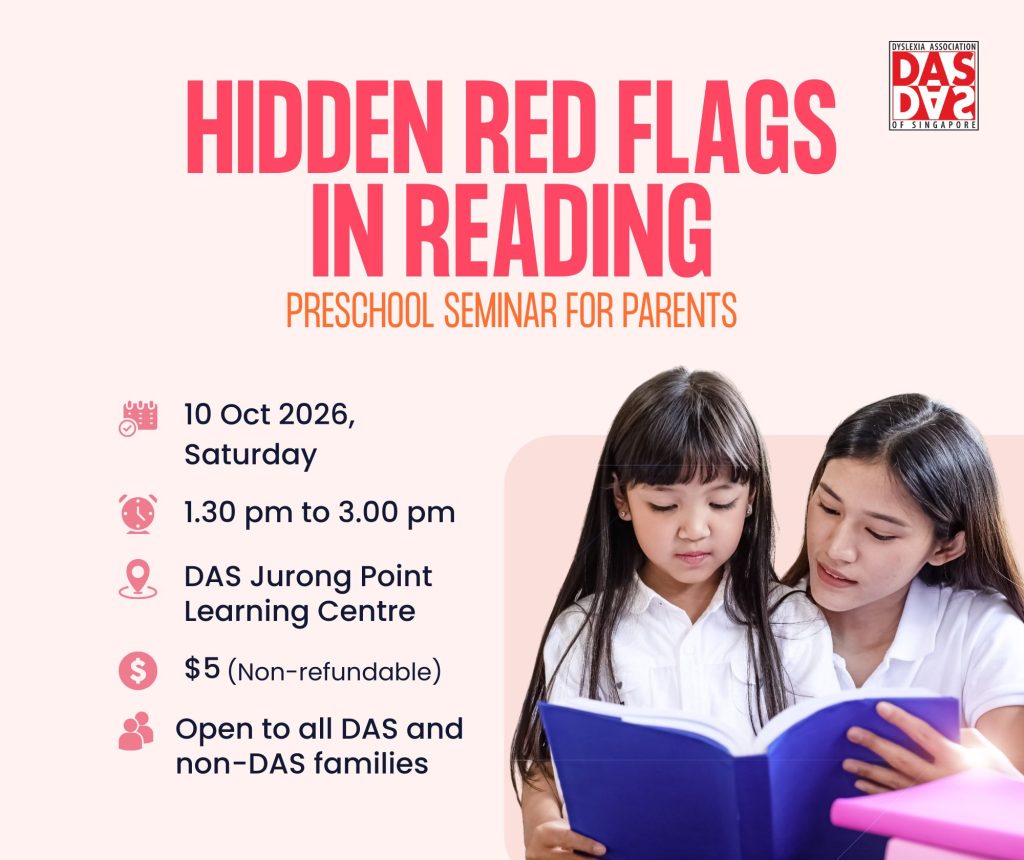
Join our Preschool Parent Seminar and leave with practical strategies, expert guidance and greater confidence to support your child’s reading journey.
You will learn how to:
- Identify literacy and reading milestones for Nursery 2, Kindergarten 1 and 2 children
- Recognise early signs that may indicate literacy and possible reading challenges
- Support their reading at home through simple ways
- Monitor their reading development