Many parents of Primary 1 students face a similar situation: their child has learned quite a number of Chinese characters, yet struggles to retain or use them, and may even resist learning new ones.
With the introduction of the Primary 1 Chinese textbook Happy Companions 2.0 by the Singapore Ministry of Education in 2024, there have indeed been improvements in how characters are introduced. However, in actual teaching practice, we find that the textbook is only a tool. What truly matters is whether teachers can guide children to master effective strategies for learning characters.
From an educational therapy perspective, the character-learning design in Happy Companions 2.0 reflects many principles aligned with the Orton-Gillingham approach. These include structured, systematic, and step-by-step instruction, as well as attention to students’ emotions to reduce cognitive load and build interest and confidence. When these design principles are applied through structured teaching, students’ efficiency and confidence in learning characters can improve significantly.
Building Characters Like “LEGO Blocks”: Starting with Foundations
The updated textbook introduces a number of seemingly simple yet powerful “basic characters”, such as 禾, 古, 寸, 井, 先, 末, and 甘. While these may not all be commonly used on their own, they serve as building blocks for many frequently used compound characters. For example:
- 禾 + 口 = 和
- 古 + 攵 = 故
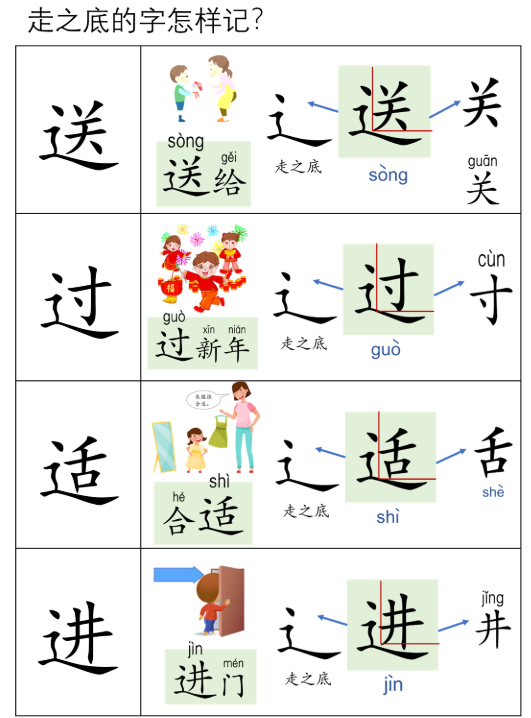
- 寸 + 辶 = 过
- 讠 + 井 = 讲
- 氵 + 先 = 洗
- 衤 + 末 = 袜
- 舌 + 甘 = 甜
These basic characters function like LEGO pieces. Once a child learns “井”, it becomes easier to learn “讲” and “进”. Similarly, learning “寸” supports understanding of “过”, “时”, “对”, “守”, and even more complex characters like “谢”. By strengthening these foundations early, children become more confident not only in recognising characters but also in writing them.
Understanding How Characters Work: Moving Beyond Memorisation
The new textbook also introduces systematic strategies for learning characters, such as breaking down characters into parts, recognising radicals, and identifying phonetic components.
For instance, when students learn the character “合”, they can more easily learn related characters like:
Once students can recognise and write “合”, they are better equipped to learn “拿”, “给”, and later “拾” and “盒”.
Other examples include:
These examples demonstrate how structure, meaning, and sound components work together. Explicit teaching of these patterns helps children see that Chinese characters follow logical rules, enabling them to build a system for learning. This reduces reliance on rote memorisation and lays a strong foundation for reading sentences, passages, and longer texts.
Developing Insight: Learning Through Connections
In the updated textbook, characters such as 苗, 男, and 雷 all share a common component: 田. Students are guided to observe these patterns:
- 苗 = 艹 + 田
- 男 = 田 + 力
- 雷 = 雨 + 田
Later, when students learn “猫” (犭 + 苗), they begin to see how previously learned characters can help them decode new ones.
This approach encourages independent discovery. When children realise that familiar characters can help them learn new ones, it builds a strong sense of achievement and motivates them to continue learning Chinese.
A Spiral Approach: Strengthening Foundations Over Time
The progression of character learning in the new教材 follows a cumulative, spiral approach aligned with the Orton-Gillingham principle of continuous reinforcement.
For example, one student learning the characters “饭”, “饱”, and “饿” quickly recognised that they all relate to food and share the “食” radical. Because she already knew the basic characters “反”, “包”, and “我”, she was able to grasp these new characters with ease.
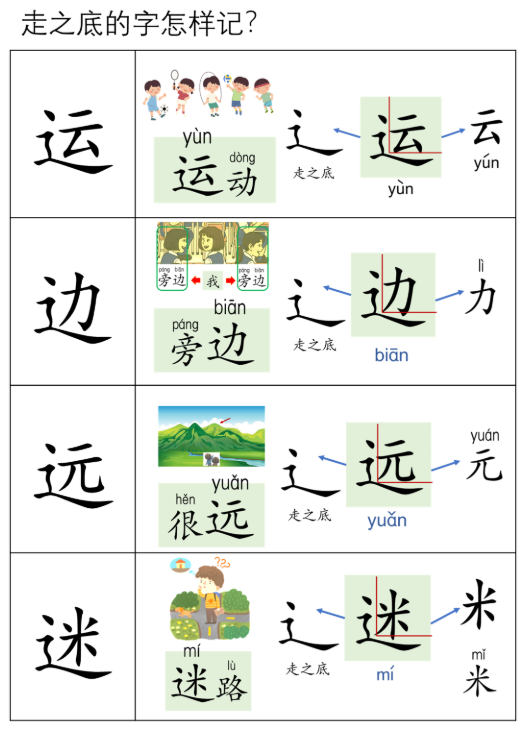
Another Primary 2 student learning characters with the “辶” component—such as 运, 边, 远, 迷, 送, 过, 适, and 进—found them easier to remember when shown how they are formed by combining known base characters (云, 力, 元, 米, 关, 寸, 舌, 井) with “辶”. With guidance on structure and stroke order, he was able to write these characters more accurately and confidently, experiencing a strong sense of accomplishment.
In Summary
The Primary 1 Chinese textbook Happy Companions 2.0 uses a structured and progressive approach to help students develop effective learning strategies and build confidence in Chinese.
Guided by the principles of the Orton-Gillingham approach, the DAS Chinese Programme makes these implicit patterns explicit and teachable. Through structured techniques such as character breakdown, radical and phonetic cues, and repeated reinforcement, students develop a transferable system for learning characters. This improves accuracy, reduces reliance on memorisation, and builds confidence, enabling students to progress smoothly from recognising individual characters to reading sentences, passages, and full texts.

 +田;学生在1B课本里学到“猫”时,更会发现:猫=犭+苗,让学生自己探索和思考怎样灵活运用有系统的认字方法去记新学的字。