
Small Steps, Big Wins: How Parents can Support Children’s Learning Challenges

For many families, supporting a child with learning and/or behavioural difficulties involves a delicate balance between meeting academic expectations, responding to emotional needs, and maintaining daily routines. While every child’s profile is unique, many families share common considerations:

How can I support my child without turning every day into a homework battle?

  1. How can I support their emotional wellbeing while addressing their academic challenges?
  2. Here are 5 practical strategies that parents can explore to manage their children’s learning and emotional well-being at home.

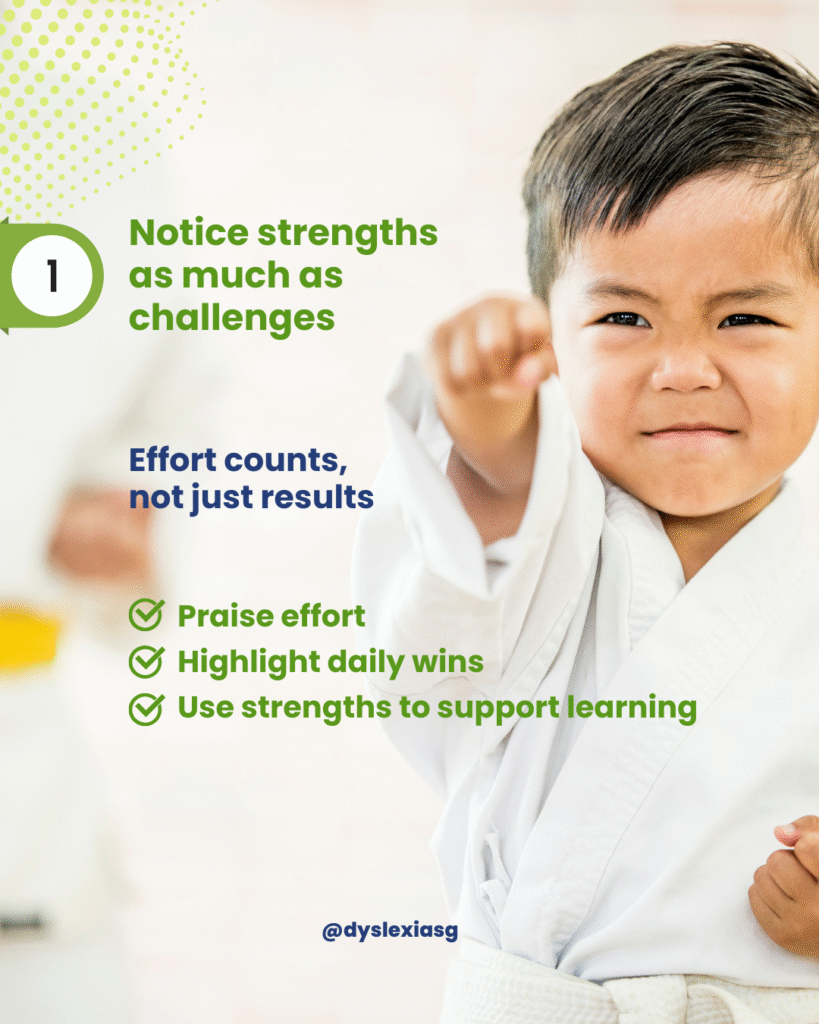
1.  Recognise strengths as much as challenges

Children with learning differences often put in significant effort to simply keep pace with daily demands. Being aware of their strengths can help to balance the focus on areas of difficulty.

Some ways to acknowledge their strengths can include:

  • Acknowledging and praising them for their effort and not just outcomes,
  • Highlighting what they do well each day,
  • Using their strengths to support their learning. For instance, if they

have a talent for drawing, encourage them to draw out their ideas before writing them down.

A strengths-oriented approach has been associated with better emotional outcomes and self-concept among learners with learning difficulties (Wilmot et al., 2023).

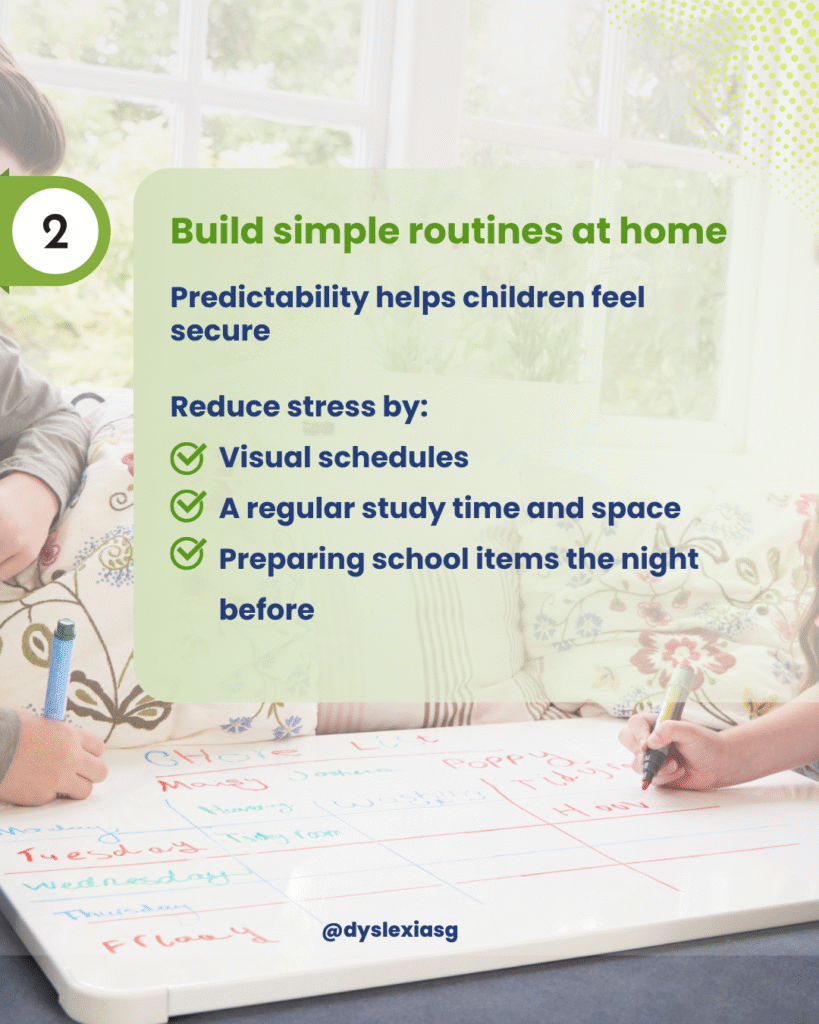
2.  Establish good routines at home

Many children with learning difficulties present with executive functioning weaknesses, which often give rise to challenges in planning, organisation, and time management. Building consistent routines at home is helpful in reducing uncertainty and increasing awareness of expectations for this group of children. 

This includes:

  • Utilising visual schedules or checklists to help them list down daily tasks,
  • Setting up a regular time and space to complete academic tasks,
  • Preparing school materials the night before sleeping.

Having these external structures in place can reduce cognitive load and support students in completing tasks more independently (Chan et al., 2023).

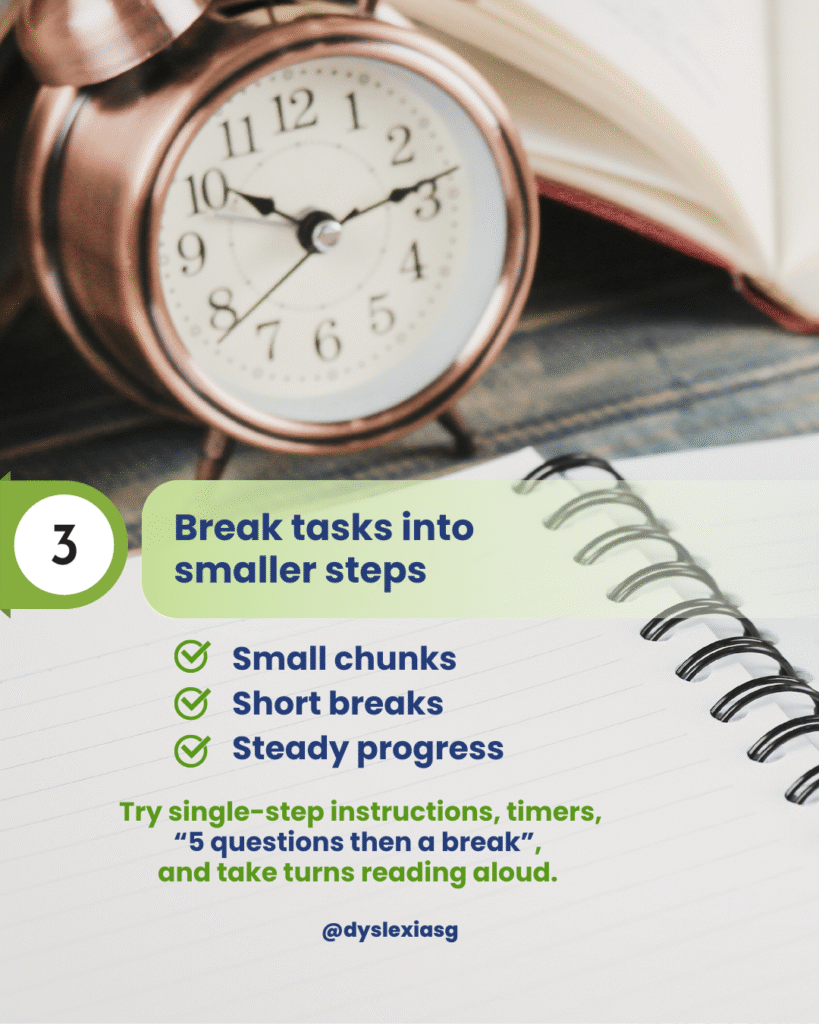
3.  Break down tasks into manageable steps and provide scaffolding

Open-ended or large tasks can feel daunting and overwhelming for children, which can lead to task avoidance or distress. Particularly for children with dyslexia, reading and spelling tasks require significantly more effort than typical learners, even when motivation is high.

Some ways to make tasks more manageable include:

📋 Giving instructions in single steps,

✂️ Dividing work into smaller pieces (e.g. completing 5 questions before taking a short break, working for 10 minutes before being given a 5-minute break),

🕛 Using timers to create defined work periods with scheduled breaks in between,

📢 Taking turns to read aloud,

📼 Using a model of accurate reading, such as text-to-speech software, so that they can hear how the words should be read while referencing the texts,

🔤 Exposing them to spelling patterns/rules rather than memorising the spelling of words as a whole.


When tasks are broken down into small, achievable steps, this can help build momentum and confidence to complete the entire task.

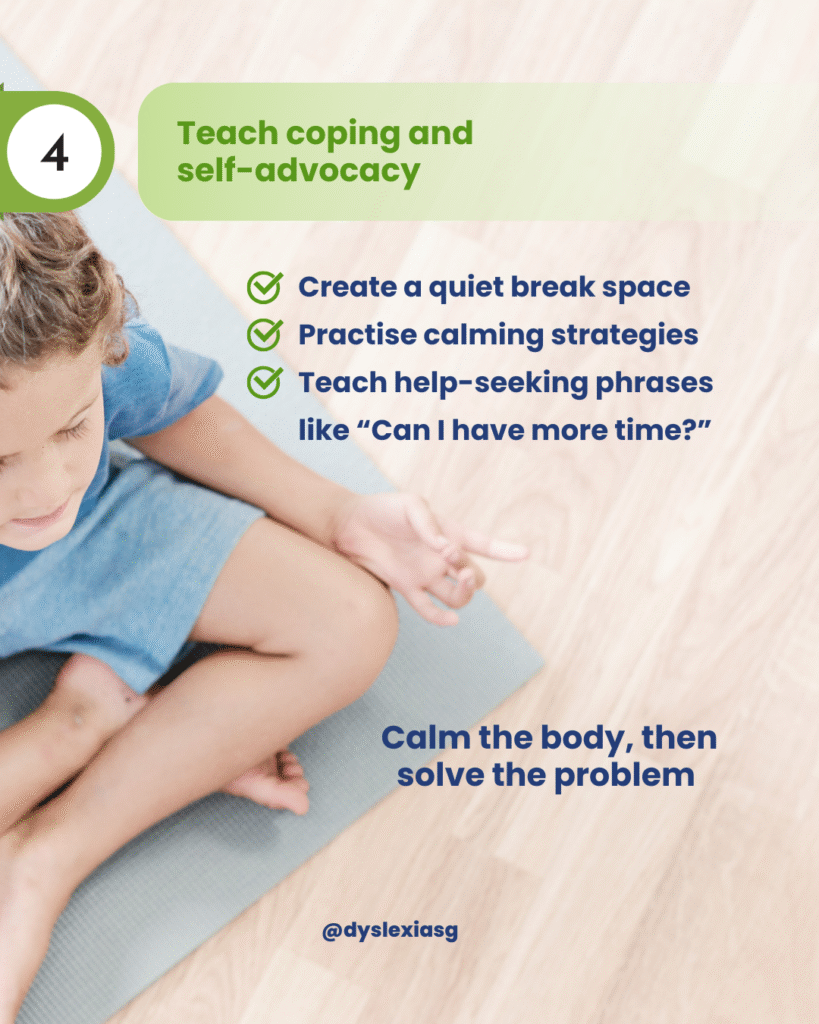
4.  Teach coping strategies and self-advocacy behaviours

Academic and behavioural expectations can be stressful, especially for children who experience repeated difficulties or corrections. It is important that children know how to regulate their emotions when anxious feelings surface.

Some ways include:

  • Teaching them to identify changes in their body when they feel overwhelmed (e.g. increased heart rate and/or temperature) and practice calming strategies such as the square breathing technique,
  • Creating a quiet, designated space for breaks,
  • Equipping them with help-seeking phrases such as “Can I have more time?” or “Can you show me an example?”

Children who develop effective strategies are observed to be better equipped to manage academic stressors and emotional challenges over time (Wilmot et al., 2023).

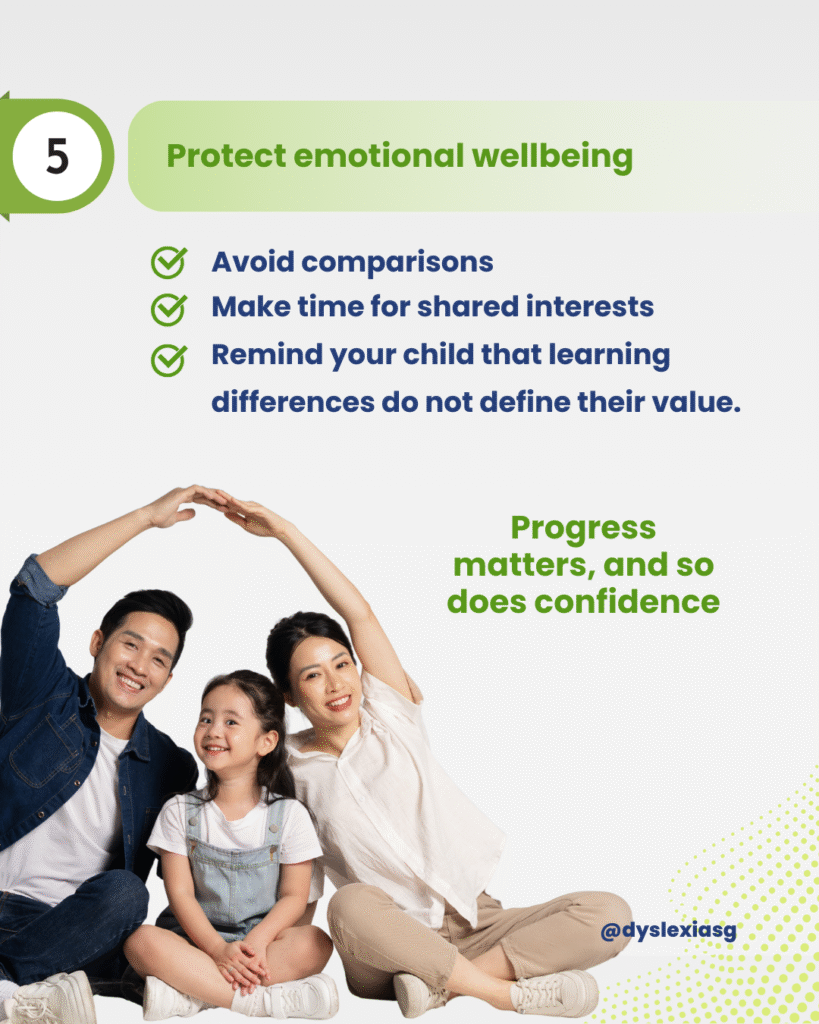
5.  Prioritise emotional wellbeing alongside academic progress

Children with learning difficulties are often aware that they face more challenges than their peers who are typical learners. Repeated academic difficulties can affect a child’s confidence and sense of belonging amongst their peers, which may affect their social interactions with others as well. It is therefore important that parents are sensitive to any feelings of insecurity that their children may experience.

 Some ways to protect children’s emotional well-being are:

  • Avoiding comparisons with peers or siblings,
  • Setting aside time to embark on activities of the child’s interest to boost positive relationships between parent and child,
  • Encouraging them to explore areas of their interest and supporting them in building their skills in those areas so that they feel competent and valued,
  • Assuring that their learning difficulties are not related to their value as a person.

Positive relationships with surrounding adults and a sense of school connectedness have been identified as protective factors for socio-emotional well-being amongst children with learning difficulties (UCL CPRU, 2020).

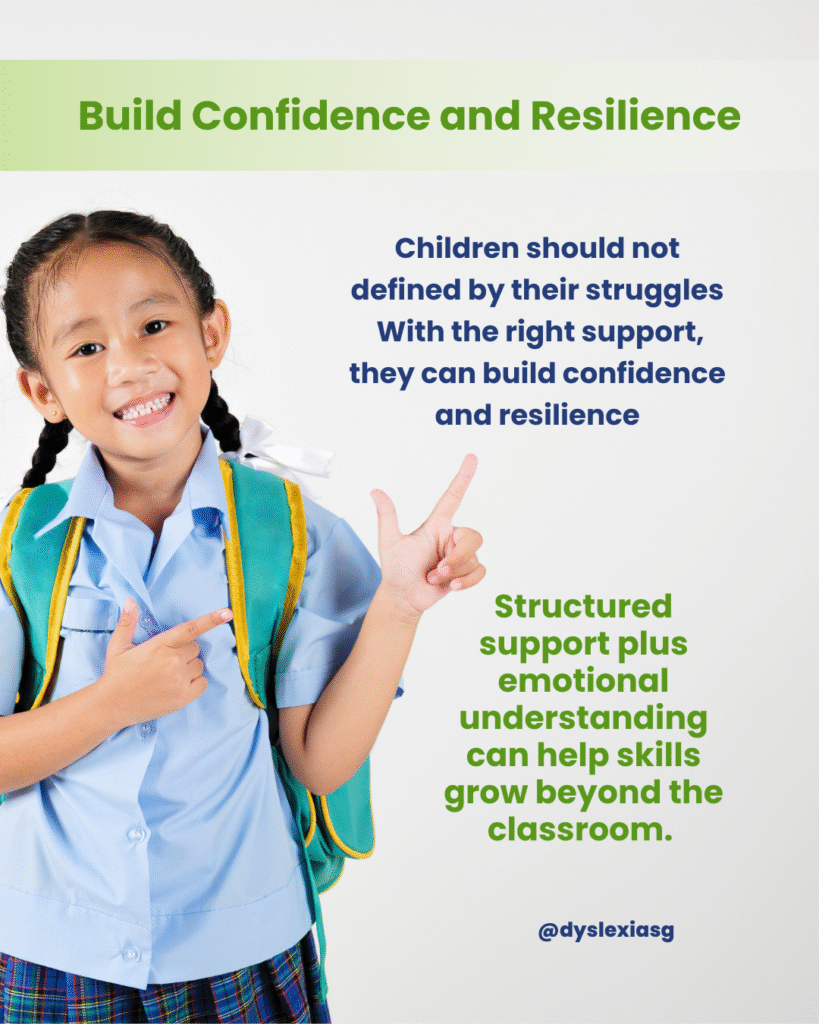
Children with learning and/or behavioural difficulties should not be defined by their challenges. With the appropriate combination of structured support, emotional understanding, and collaborative partnerships, it is hoped that they can develop confidence, resilience, and soft skills that extend beyond the classroom.

If you are still concerned about your child’s well-being and would like to seek professional support, our psychologists at the Dyslexia Association of Singapore (DAS) can work with you to better understand your child’s learning and behavioural needs and provide guidance on appropriate support strategies.


References

Wilmot, E. G., et al. (2023). Understanding mental health in developmental dyslexia. International Journal of Environmental Research and Public Health.

Chan, E. S., et al. (2023). Organisational skills training and executive functioning outcomes in children with ADHD: A randomised controlled trial.

UCL Centre for Psychological Research Unit. (2020). Reading difficulties, mental health, and school connectedness.

You can find out more about the psychological services we offer at DAS SpLD Assessment Services

You may also consider enrolling your child on our social skills programme Ready, Set, Connect!

This programme is designed to help children develop self-awareness, empathy, and practical strategies to navigate social situations.  Our next run begins on 25 March 2026.

Register NOW! READY SET CONNECT!  bit.ly/DAS-RSC