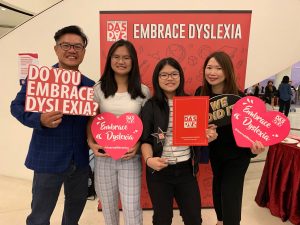
When we think of dyslexia, we often picture the struggles children face in the classroom—difficulty reading, writing, and keeping up with peers. What we rarely talk about are the adults those children become: the innovators, the visionaries, and the self-starters who forge their own paths—not in spite of dyslexia, but because of it.
A growing number of successful entrepreneurs are now speaking openly about their experiences with dyslexia, challenging long-held assumptions about what it means to learn differently. In Singapore, research conducted by the Dyslexia Association of Singapore (DAS) revealed that 26% of local entrepreneurs surveyed had dyslexia1—a rate more than twice that of the general population. So, what sets these individuals apart?
Dyslexia: A Different Kind of Thinking
While the school system often highlights the limitations of dyslexia, the workplace—especially the world of entrepreneurship—can be where these individuals shine.
The DAS study found that dyslexic entrepreneurs tend to score significantly higher in:
- Visual thinking (seeing problems and solutions as images)
- Visual-spatial ability (understanding relationships between objects and space)
These are the very skills that drive innovation, creativity, and problem-solving, hallmarks of successful entrepreneurs.
Turning Challenges into Motivation
For many dyslexic entrepreneurs, the pain and frustration of school was a turning point. They chose to start businesses not only to pursue their passions but also to take control of how they work and contribute. Some even cited dyslexia itself as a reason they became entrepreneurs, with one participant sharing:
“Becoming an entrepreneur was like a drug to overcome my pain in school.”
– Dyslexic, Age 19
Another remarked:
“I see the bigger picture that many others don’t understand.”
– Dyslexic, Age 58
These stories aren’t just anecdotes—they’re evidence of a deeper truth:
dyslexics think differently, and in business, that difference can be an asset.
What Can We Learn?
This research challenges the outdated narrative that dyslexia is only a barrier to success. Instead, it positions dyslexia as a different cognitive profile—one that, when supported, has the potential to lead to exceptional outcomes.
“I am where I am today because of dyslexia, not in spite of it.”
– Edward Yee, Singaporean entrepreneur and Rhodes Scholar
A Call to Reframe the Conversation
If we continue to define success solely through academic achievement, we miss out on nurturing the very talents that drive our economy and innovation.
It’s time we stop asking, “Can people with dyslexia succeed?” and start asking, “What can we do to unlock the potential that’s already there?”