
Every child is unique and has their own strengths, temperament and character. The list goes on. This uniqueness extends to how they learn best. Understanding your child’s learning style can tap into their potential and make learning easier and more fun.
What Are the Main Learning Styles?
While learning is complex, three main styles are commonly used to categorise how children absorb information most effectively:
- Visual Learners: These children learn best by seeing information. They respond well to colors, charts, pictures, written words, and demonstrations.
- Auditory Learners: These children learn best by hearing. They remember things through songs, rhymes, discussions, listening to stories, and verbal instructions.
- Kinesthetic/Tactile Learners: These children learn best by doing and touching. They need hands-on activities, movement, building, and sensory experiences to process new information.
Preschoolers learn best when instruction aligns with their preferred style. When a teacher or parent teaches a new concept in a way that naturally “clicks” with the child’s brain, the information sticks. It reduces frustration and increases engagement, turning potential struggles into moments of discovery.
For example, an Auditory Learner might grasp letter sounds instantly through an alphabet song, while a Kinesthetic Learner might need to literally trace the letter with their finger
If your child is struggling with foundational literacy skills, understanding their style can be a helpful way to learn how to engage and teach your child. It shifts the focus from “my child can’t learn this” to “we need to teach this in a different way.”
If a Visual Learner struggles with sounding out words, try using color-coded flashcards or drawing pictures to represent the word’s meaning.
If an Auditory Learner struggles to recognize a word visually, practice saying the word aloud repeatedly or incorporating rhythm.
If a Kinesthetic Learner has difficulty with letter formation, have them build the letter with playdough or trace it on a textured surface.
You are the best observer of your child! Watch how they naturally engage with the world:
Preference | Signs to Look For | How to Cater to Them |
|---|---|---|
Visual | Loves looking at picture books, notices colors, remembers people’s faces, uses drawing to communicate. | Use charts and whiteboards. Write down instructions instead of just speaking them. |
Auditory | Talks to themselves, loves music/rhymes, easily follows verbal directions, gets distracted by loud noises. | Read aloud often. Use rhymes for memory. Talk through problems out loud. |
Kinesthetic | Fidgets or moves a lot, learns by building or taking things apart, loves hands-on games and sensory play. | Allow frequent movement breaks. Let them use their hands (blocks, sand, clay) to learn concepts like counting or shapes. |
Want to find out how DAS Preschool Programme uses multi sensory methods to support our preschoolers with early literacy challenges? Sign up for our free online screening today!
Click here to register for the screening.
Click here to find out more about the Preschool Programme.
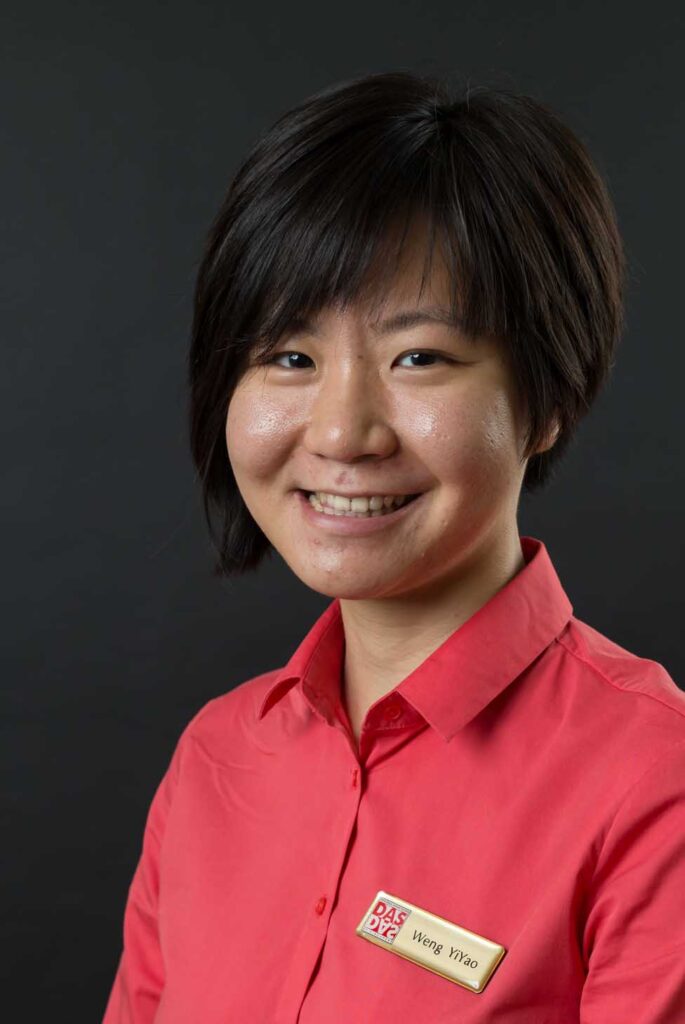
Weng Yiyao
DAS Preschool Programme Manager and Lead Educational Therapist
About The Author
Weng Yiyao is the Lead Educational Therapist and Preschool Programme Manager at the Dyslexia Association of Singapore (DAS). With over a decade of experience, she specialises in supporting preschoolers with dyslexia through targeted literacy interventions. Passionate about empowering young learners, Yiyao is also a fellow of the Register of Educational Therapists Asia (RETA) and holds a Master of Arts in Special Educational Needs.