This blog was written by Isha Ghosh, student of Tanglin Trust School, Grade 10.
As part of my Design and Technology IGCSE course, I was tasked with a non-exam assessment to create a product based on one of three prompts: educational toys and games, eating away from home, or helping in sports. The first option, educational toys and games, stood out to me because I wanted to use product design to help children learn.
After brainstorming, I decided to focus on an area with fewer existing resources: learning differences. I researched dysgraphia, dyscalculia, and other conditions before narrowing my project to one of the most common learning challenges: dyslexia.
Partnering with DAS to Understand Dyslexia
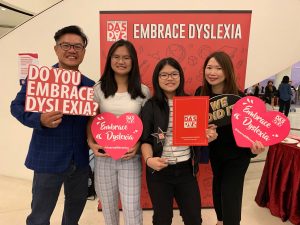
Knowing a few people with dyslexia, I had a general idea of how it affects children, but I wanted to learn more in order to design a truly effective tool. My search led me to DAS, the leading organisation supporting individuals with dyslexia in Singapore.
I reached out online to Dr Geetha Shantha Ram, Director of General Management at DAS, who kindly connected me with Ms Janitha in July 2024. She became my mentor throughout the project, guiding me with insights and feedback during multiple meetings and discussions.
Our very first session helped me understand how dyslexia impacts reading and literacy skills, and what features would make an educational tool both accessible and engaging for young learners.
From Concept to Prototype
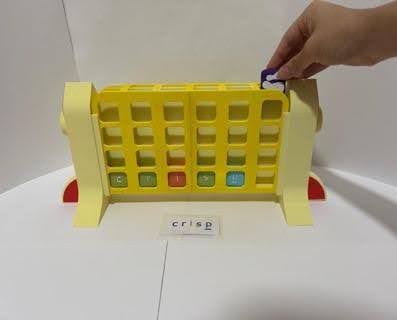
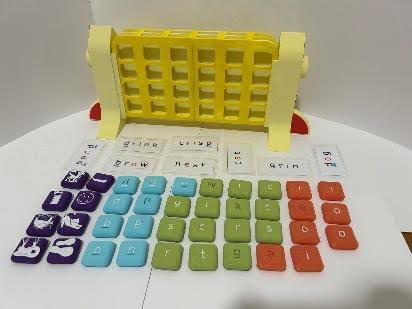
In October, after gathering survey feedback from both DAS students and my own school, I designed and sketched three possible manipulatives for dyslexia support. Together with Ms Janitha, we selected the most promising idea: a game inspired by Connect Four, but adapted to support spelling and phonics practice.