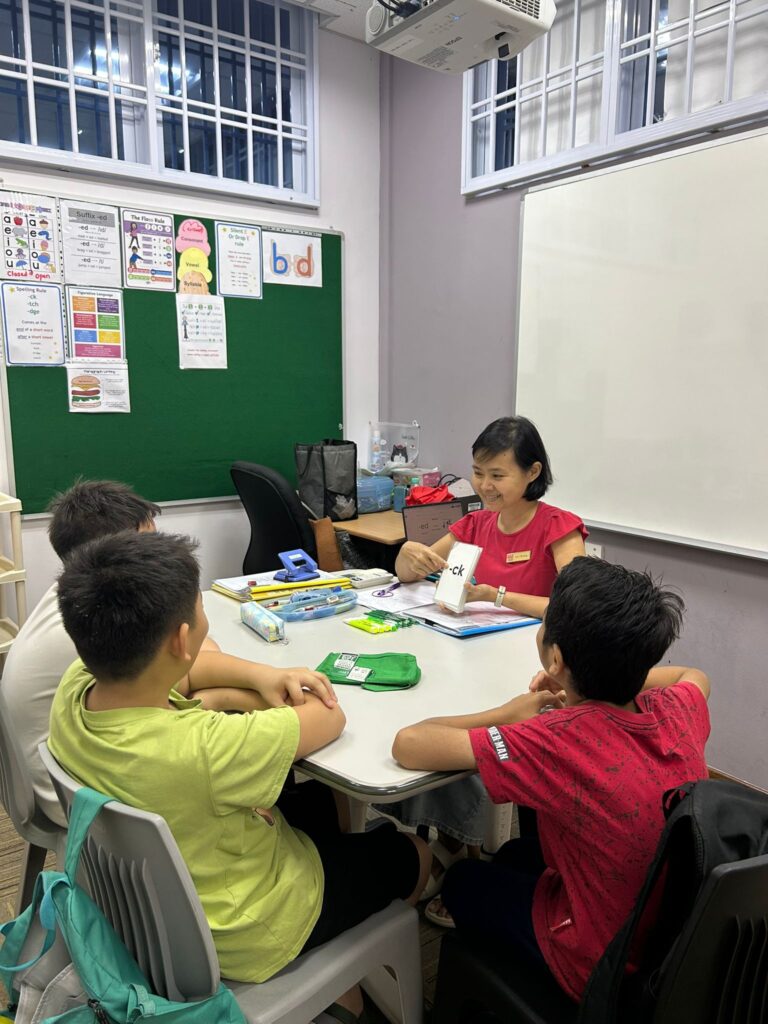
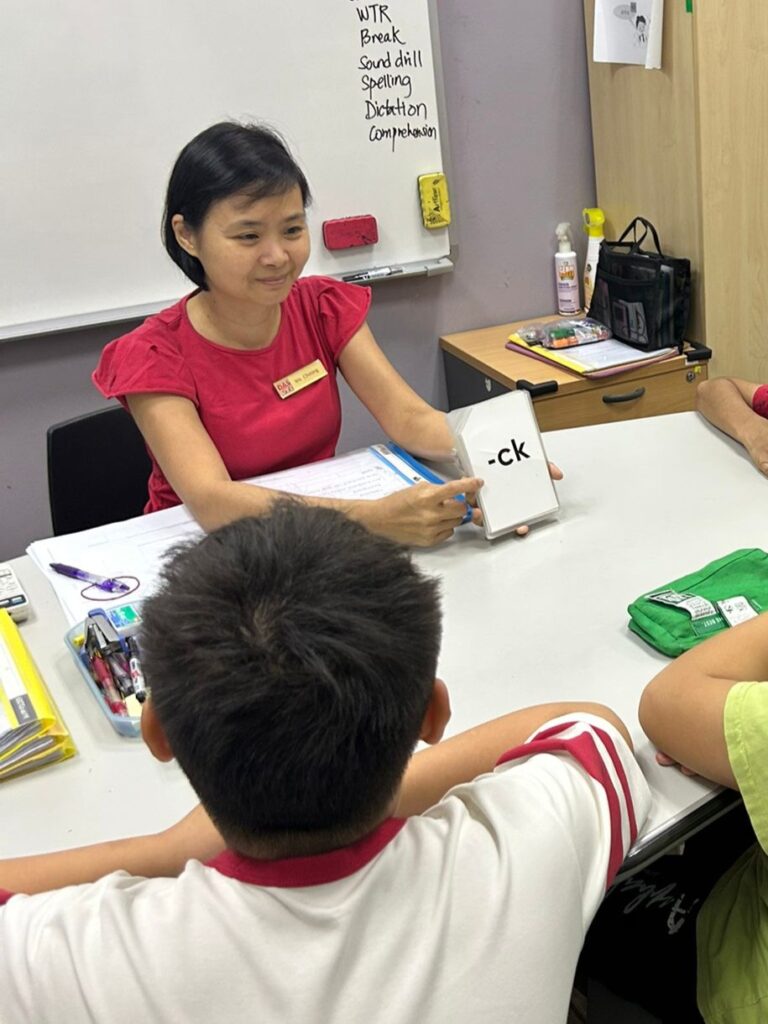
I recall one student who has been with me since 2023. He was diagnosed with dyslexia, ADHD, and ASD. In the early days, he often struggled with frustration and emotional meltdowns. Through patient observation, I began to identify his triggers such as difficulty retrieving letters during spelling or feeling anxious when he saw a cross marked on his work.
Instead of enforcing correction, I adjusted my methods. I placed a tray of letters in front of him to support his letter retrieval, and rather than marking mistakes immediately, I first gave him a chance to correct them himself. Over time, he became more confident and even started accepting my corrections without fear. That transformation was more than progress, it was trust made visible.
Growing as a Therapist and as a Learner
Since joining DAS, I’ve found myself constantly learning alongside my students. The ongoing professional training and mentorship here have allowed me to refine my techniques and deepen my understanding of literacy intervention.
The Specialist Diploma equipped me to be a competent literacy interventionist, helping me design structured, multisensory lessons tailored to my students’ needs. My postgraduate and Master’s studies have also influenced how I think about teaching. They’ve encouraged me to reflect on methodologies, observe long-term outcomes, and consider how a child’s home environment and support system can shape their learning success. Adopting a growth mindset has been crucial, it changes how I view mistakes, both mine and my students’.
Lessons Beyond the Classroom
The skills I’ve developed at DAS have extended far beyond my work. When my father was diagnosed with dementia, I found myself applying the same principles I use with my students. I broke down instructions for my mum, explained how dementia affects cognition, and reminded her that his words were not intentional but a reflection of his condition. That experience reminded me that patience and understanding are universal forms of teaching.
Looking Ahead
As both an Educational Therapist and a parent, I’ve also seen the value of DAS’s programmes through my son’s experience in the Prep 2 PSLE and Chinese Programme. He has always enjoyed the Specialised Educational Services (SES) programmes, and it’s heartening to see how he can apply what he learns directly in his exams. I appreciate how the curriculum breaks down complex concepts into manageable steps which are the same structured, meaningful approach I use with my students.
In the years ahead, I hope to help parents reshape unrealistic expectations, recognise their child’s unique strengths, and develop empathy for their learning journey. I also hope to mentor new Educational Therapists or contribute to resources that make learning more accessible for all our students.