

Between busy schedules, work, and household responsibilities, the idea of teaching or reinforcing learning at home can feel overwhelming. What if we told you that some of the most powerful early literacy learning happens in everyday moments?
Your home, your neighbourhood, and your daily routines are all valuable tools for building your child’s language and literacy skills. Learning does not just happen during school hours. It happens naturally through conversations and shared experiences.
Turning Everyday Moments into Literacy Adventures
The key is to include early literacy in activities you are already doing without realising it! Here are some easy ways to do just that:
1. Supermarket Hunt
- Letter Hunt: “Can you find something that starts with the letter A?”
- Label Reading: Point out words on cereal boxes, milk cartons, or price tag.
- List Power: Let your child help make the shopping list by drawing pictures or writing letters. Tind the items together at the supermarket.
- Sorting and Grouping: “Let’s put all the fruits here and all the vegetables there.” This builds vocabulary and early sorting skills.
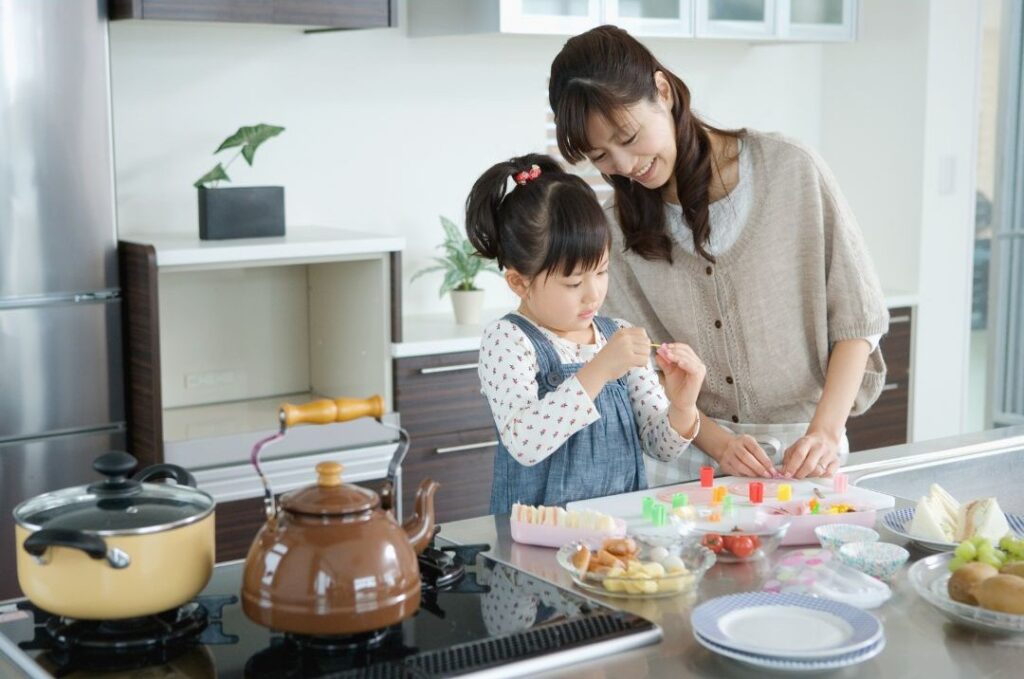
2. Kitchen Moments
- Recipe Reading: Read simple recipe steps out loud. “First, we need two cups of flour.”
- Counting and Measuring: “How many eggs do we need?” or “Can you fill one cup with sugar?”
- New Words: Introduce words like “stir,” “pour,” “knead,” or “fragrant.”
Sequencing: “What did we do first? What comes next?”
3. Out and About
- Sign Spotting: Look at signs around you. “That sign says STOP!”
- Everyday Words: Notice logos or words on buses, shops, or buildings.
- Describing the World: “What do you see?” or “Tell me about the big red bus.”
- Make Up Stories: Create a story together based on what you see. “Once upon a time, a little bird saw a big green tree…”
4. Chores and Daily Routines
- Following Instructions: “First, pick up your blocks. Then put your books on the shelf.”
- Laundry Sorting: “Let’s put the dark clothes in one pile and the light ones in another.”
- Talking Through Routines: “First we brush our teeth, then we put on pajamas, and then we read a book.”
The Power of Everyday Learning
These everyday activities are powerful learning tools because they are:
- Real: Children learn in meaningful, everyday situations.
- Fun: They involve movement, conversation, and discovery.
- Relaxed: There are no right or wrong answers, just learning through play.
- Word-Rich: Children learn that words are everywhere and can be fun and useful.
A language rich environment helps unlock your child’s early literacy potential. By talking with your child, asking questions, and pointing out words in your surroundings, you are helping build their vocabulary and love for learning.
Turn your next supermarket visit, walk in the park, or bedtime routine into a fun early literacy adventure. You are helping your child grow into a confident and curious learner!
Our Preschool Educational Therapists understand that early literacy development is about nurturing belief and joy in learning. With simple strategies and mindful encouragement at home, you become your child’s greatest supporter, helping them grow not only in ability but in confidence and curiosity.
Find out more about our preschool programme here.
Weng Yiyao
DAS Preschool Programme Manager and Lead Educational Therapist
About The Author
Weng Yiyao is the Lead Educational Therapist and Preschool Programme Manager at the Dyslexia Association of Singapore (DAS). With over a decade of experience, she specialises in supporting preschoolers with dyslexia through targeted literacy interventions. Passionate about empowering young learners, Yiyao is also a fellow of the Register of Educational Therapists Asia (RETA) and holds a Master of Arts in Special Educational Needs.