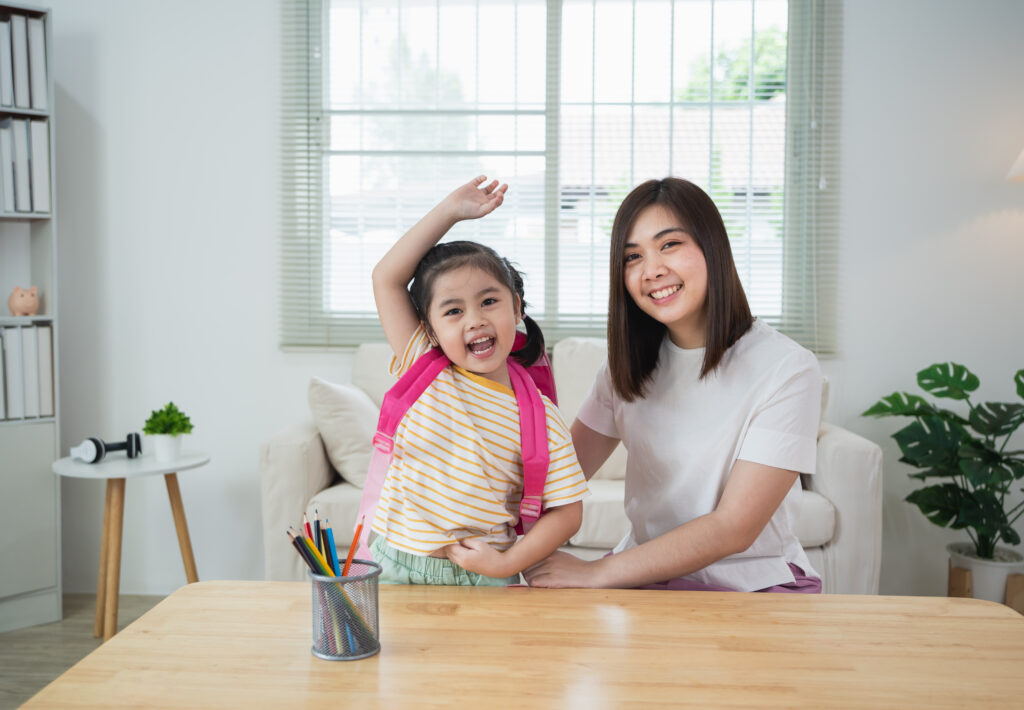
The transition from preschool to Primary 1 is a major milestone for children and parents. Beyond academic readiness, children are expected to adapt quickly to a more structured environment, longer school hours, larger class sizes, and higher expectations for self-independence. For children with learning and behavioral needs, this transition can be particularly demanding, and it is common for parents to feel anxious about whether their child will cope.
As a parent, here are five practical ways you can support your child and manage this transition more confidently.
Look Beyond Academic Readiness
It is natural to worry about whether your child can read, write, or keep up academically. However, school readiness in Primary 1 goes beyond academic skills alone. Many children with learning or behavioral needs struggle more with attention, emotional regulation, following instructions, or coping with classroom demands.
As a parent, you can start by helping your child build everyday skills such as listening, managing emotions, and persisting with tasks, rather than excessive academic drilling. Understanding that learning and behavioral challenges are not due to laziness or lack of effort can also help you respond more calmly and supportively when difficulties arise.
2. Prepare Your Child for Daily School Routines
Upon entering Primary 1, children are expected to manage their belongings, follow a time table, and transition between activities.
To prepare your child to meet these expectations, you can help your child by practicing simple routines at home, such as packing their school bag, following a morning routine, or completing short tasks independently. Consider using visual schedules, checklists, and clear step-by-step instructions, which can be especially helpful for young children who struggle with organisation.
3. Support Your Child’s Emotional Adjustment
Starting primary school can be emotionally challenging, particularly for children who are more sensitive or anxious. Your child may not always be able to express their worries clearly and it is not uncommon that stress may show up as behavior changes instead.
Importantly, make time to talk to your child about school in a calm and reassuring way. Help them name their feelings, and teach simple strategies such as taking deep breaths or asking for help from a teacher when they feel overwhelmed. Reassure your child that it is normal to feel nervous and that adjustment takes time.
Try this tip: Use a simple sticker chart to track your child’s progress, such as attending school each day or working toward a specific goal (e.g., writing down their homework in the student handbook). This can give your child something to look forward to and help them see their efforts and progress over time.
4. Communicate Early and Clearly with the School
If your child has identified learning or behavioral needs, it is helpful to share relevant information with the school early. This may include a psychological report, a post-intervention progress update, or a doctor’s memo. Doing so can help teachers better understand your child and provide appropriate support in the classroom.
When communicating with the school, try to focus on what helps your child cope, rather than on his or her difficulties alone. Viewing the school as a partner can support a more positive working relationship and ease anxiety for both you and your child.
5. Take Care of Yourself and Set Realistic Expectations
Starting Primary 1 is a big thing! It is common for parents to feel worried or pressured to ensure that your child keeps up with peers. However, children with learning or behavioral needs often progress at their own pace. Remind yourself that progress may be gradual and that setbacks are a natural part of the adjustment process.
In conclusion, the transition to Primary 1 is a period of adjustment for both children and parents. For children with learning or behavioral needs, this process may take a little more time and support.
Focusing on routines, emotional adjustment, and clear communication with the school can help make this transition more manageable. Just as importantly, setting realistic expectations and giving yourself space to adjust can make a meaningful difference as your child settles into primary school.
If, despite these efforts, your child continues to experience significant difficulties coping in school, it may be helpful to seek professional support. Our psychologists at the Dyslexia Association of Singapore (DAS) can work with you to better understand your child’s learning and behavioral needs and provide guidance on appropriate support strategies.
Early support can help address challenges before they escalate and offer reassurance to both parents and children during this transition. You can find out more about the psychological services we offer through the DAS SpLD Assessment Services.