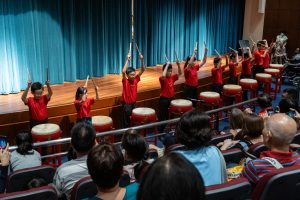
Learning Chinese characters can be especially challenging for students with dyslexia. Unlike alphabetic languages, Chinese uses characters with complex visual structures involving radicals, spatial arrangements and specific stroke orders. Students need to do more than simply recognise a character, they must also be able to write it correctly, remember it and use it appropriately.
For students with dyslexia, difficulties with visual recognition, working memory, writing coordination and word retrieval can make this process slower and more frustrating. Finding teaching approaches that better match the way these students learn is therefore important for both parents and educators.
One approach is multisensory learning, which combines visual, auditory, tactile and movement-based experiences. Instead of learning only by looking and writing, children can see, hear, touch, say and write what they are learning. In Chinese, this can help students connect a character’s form, structure and meaning, making abstract characters more concrete and easier to remember.
1. Why Is multisensory-learning Important?
Multisensory learning is not simply about adding more activities to a lesson. It involves presenting information through multiple senses to strengthen how the brain processes and remembers what is being learnt.
For some students with dyslexia, learning through a single method, such as repeatedly looking at or writing a character, may not be enough. When information is reinforced through touch, sound, movement and sight, students have multiple ways of processing and recalling what they have learnt.
At the Dyslexia Association of Singapore (DAS), we incorporate multisensory approaches into Chinese language teaching. Students may visually examine the structure of Chinese characters, say and listen to their pronunciation, practise writing characters in the air or sand, and use gestures to reinforce meaning.
By engaging sight, sound, touch and movement, abstract connections between a character’s pronunciation, form and meaning become more tangible. This can strengthen students’ memory while helping them develop greater confidence and interest in learning Chinese.
Chinese radicals are a good example. Radicals often provide clues to a character’s meaning. For instance, 讠, the speech radical, is commonly associated with speaking or language; 女, the female radical, often relates to women; while 忄 and 心, both related to “heart”, frequently appear in characters associated with emotions or states of mind.
Instead of simply looking at these radicals and memorising their shapes, children can touch them, say what they mean and even use movements to represent their meanings. Making these concepts more visual and tangible can help children develop deeper understanding rather than relying solely on memorisation.
Multisensory learning can also improve motivation. Some children with literacy difficulties may lose confidence after experiencing repeated struggles with learning. When activities become more engaging and manageable, children have more opportunities to experience success, which can encourage participation and reduce learning anxiety.
Parents can also apply these principles at home. One simple activity is to create tactile radical cards that children can touch and interact with, helping them understand Chinese character structures and strengthen their memory through repeated practice.
2. Make Your Own Multisensory Radical Cards
二、在家也能做的多感官教具:偏旁卡
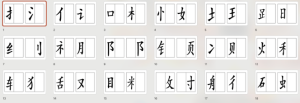
Step 1: Create the radical cards in PowerPoint
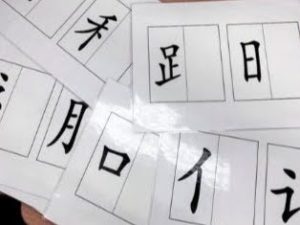
Choose common radicals that are appropriate for your child’s age and literacy level. In PowerPoint, place each radical according to where it would usually appear within a Chinese character, such as on the left or right, top or bottom, or surrounding another component.
*See the tip at the end of this article for instructions on inserting Chinese radicals.
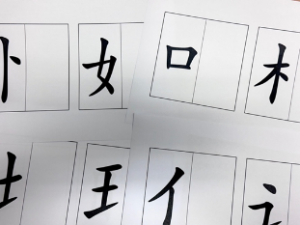
Step 2: Laminate the cards.
Laminate each card or place it inside a transparent plastic sleeve. This protects the card and allows your child to write on it repeatedly.
Step 3: Make the characters tactile
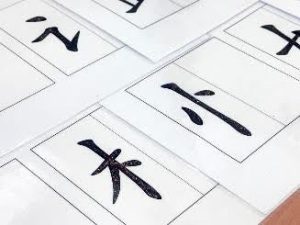
Trace over the strokes with glue to create a raised surface. Once dry, your child can run their finger along each stroke and physically feel its shape and direction.
Your multisensory learning cards are now ready! By making the radicals touchable, children can use their fingers to follow the strokes, reinforcing their understanding of the character’s shape and spatial structure.
Try This 5-Minute Multisensory Exercise at Home
Beginner: Touch, Say and Think
Touch: Ask your child to trace the radical with their finger. This allows them to explore its shape through touch and strengthens their visual memory of it.
Say: Encourage your child to name the radical, describe where it appears within a character and think about the meaning commonly associated with it.
Think: Ask your child to name one to three words containing the radical, depending on their ability. This helps build connections between the radical, its meaning and related vocabulary.
Advanced: Touch, Say, Think and Write
Follow the same Touch, Say and Think steps above, then add:
Write: Encourage your child to write related words on the laminated card or a whiteboard.
When practising at home, parents can adjust the activity according to their child’s abilities rather than expecting them to master everything at once.
Children who require more support can begin simply by recognising and naming a radical. Once they become familiar with it, parents can introduce its meaning before encouraging them to think of related words. Children who are ready for a greater challenge can progress to writing and applying the words they have learnt.
It is also helpful to keep practice short and frequent. Spending just 5–10 minutes a day can be more effective than having one long study session. Short, manageable sessions can help students with dyslexia build their memory and confidence while making it easier for them to stay focused.
Consistency between school and home can also reinforce learning. When similar approaches, such as grouping radicals or using tactile activities, are used in both settings, children encounter the same concepts in different contexts, providing repeated opportunities to strengthen their understanding and memory.
Learning Chinese One Step at a Time
Helping a child learn Chinese is not necessarily about teaching more, but about finding an approach that works for them and practising consistently.
Just 5–10 minutes a day of seeing, hearing, touching, saying and writing Chinese characters can help children build connections between a character’s form, structure and meaning. Through regular practice, they can gradually strengthen character recognition and recall while developing greater confidence in learning Chinese.
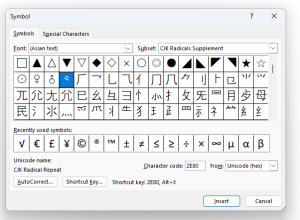
Tip: How to insert Chinese radicals in Microsoft Word
Go to Insert > Symbol, select [Asian Text] under Font, then choose [CJK Radicals Supplement] under Subset.
Looking for Chinese language support that better suits the way your child learns? The DAS Chinese Programme uses multisensory teaching approaches to help children with literacy difficulties strengthen their Chinese reading and writing skills while building confidence in learning the language.