Written by Jenny Liu,
Chinese Educational Therapist
作为一名华文教育治疗师,在课堂上经常遇到这样的情况:
给学生看“互相帮助”或“扫地”等学过的词语,带他复习读音 和词义后,过了一会儿再请他解释,有些学生仍然难以回想词语 的意思。到了看图说话环节,明明图上画着人在推车,虽然他努 力想了一会儿,但最终嘴里只能挤出一个“走”字。
很多家长常问:“老师,他在家天天背词语表,为什么就是记不 住,到了口试和日常表达就大脑一片空白?”
在多年的读写干预和课堂观察中,我发现,部分学生并不是不努 力,而是单纯依靠“看词—记定义—重复背诵”的方式,仍然难 以把词语的字形、读音、意思和用法稳定地联系起来。在这里, 主要原因有以下几种:
1.抽象且孤立的词汇,难以在表达时被快速提取:
新加坡学生日常以英文为主,对于伴有读写障碍的学生来说,汉 字本身就是极其复杂的二维图像。如果一个华文词语只停留在纸 面上,缺少具体情境帮助建立联系,在这里,“汉字”在他们的 脑海里就是缺乏具体语义连接的符号,自然转头就忘。
- 缺乏“多感官”的提取通道:
对部分读写障碍学生而言,仅依靠视觉辨认和口头重复,可能不 足以帮助他们稳定地建立词语与词义之间的联系。如果教学只靠 “眼睛看、嘴巴念”,大脑难以为其建立强有力的回想线索。当 他们试图调取词语时,思维通道是阻塞的。
- 无法在脑海里完成“词义编码”:
对一些以英语为主要日常语言的双语学习者来说,英文解释可以 帮助他们快速获得大致词义,但如果学习停留在“中文词语—英 文翻译”的层面,孩子仍可能缺乏对词语使用情境的深
度理解。因此,针对一些抽象词如“鼓励”、“照顾”,与其 只告诉孩子 “鼓励是什么意思”,不如让孩子看到、听到、说 出、演示并使用“鼓励”。
DAS 课堂实践:
在干预课堂上,我认为:对读写障碍的学生而言,文字是死板 的,但身体的动作是活的。既然眼看手记走不通,我们就必须 换一种调动多感官的教学路径—多感官教学,将视觉、听觉、 语言和动作结合起来,可以为学生提供更多理解和回想词语的 线索。
例如,在教学抽象的动作词“互相帮助”时,我不会直接出 示字卡进行抽象解释,而是通过小组合作的真实情境带学生 体验:
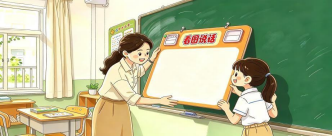
教室里的“看图说话”展示板尺寸较大,需要将两边的卡槽同 时固定好才能挂上墙。我请了一位学生上台。面对较宽的展 板,我一个人无法同时固定两端。于是我对她说:“老师一个 人够不到两边,需要你搭把手。你帮我按住这一头,我来固定 那一头!”在学生的配合下,我们齐心协力将展板稳稳挂好。
体验:
看着稳固的展板,我对全班总结道:“刚刚同学帮我、我帮 同学,这种在做事时互相配合的协作方式,就叫做‘互相帮 助’!”这一刻,抽象的词义直接和肌肉记忆、视觉画面挂 钩了。
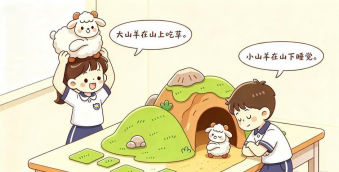
出“山上”与“山下”的具象 场景,并提供山羊玩偶。
- 行动一(山上): 学生拿着“大山羊”玩偶,双手高 举放在头顶做“大山羊”手势,大声说:“大山羊在山 上吃草。”
- 行动二(山下): 随后,另一位学生将“小山羊”玩 偶移动到山脚下的洞口,同时双手抱臂蜷缩身体做“睡 觉”手势,小声说:“小山羊在山下睡觉。”
通过这种桌面教具操作与身体模仿手势相结合的方式,让学生 在 “手脑联动”中直观感知到了“山上”与“山下”的空间 方位。下一次进行句式表达时,学生唤醒的就是手部操作与肢 体动作的具象线索,原本抽象的句型结构自然迎刃而解。
总而言之,对于伴有读写障碍的学生而言,多感官教学与情境 化体验并非要取代传统的语言学习,而是作为一种强有力的辅 助手段。通过将抽象的文字符号与视觉观察、听觉刺激、身体 动作和语言表达有机结合,我们为孩子搭建起了多条通往语义 理解的辅助桥梁。身体的动作与真实的合作情境,帮助他们把 死板的词语与鲜活的具体经验建立起联系,从而更容易理解词 语的含义与用法。当学习不再局限于枯燥的机械背诵,孩子才 能在“多通道” 的线索支持下激活回忆,真正将华文词汇转化
为可以自然运用的语言能力。
As a Chinese Educational Therapist, I often encounter situations like this in the classroom:
I show a student familiar words such as “互相帮助” (helping one another) or “扫地” (sweeping the floor), and we review their pronunciation and meaning together. Yet when I ask about them a little later, some students still struggle to recall what they mean. During a picture discussion activity, a student may see someone pushing a cart, but even after thinking hard, the only word they can manage is “走” (walk).
Many parents ask, “My child memorises vocabulary lists at home every day. Why can’t they remember the words? Why does their mind go blank during oral exams or everyday conversations?”
Through years of literacy intervention and classroom observation, I have found that, for some students, the difficulty is not a lack of effort. Simply looking at a word, memorising its definition and reciting it repeatedly may still leave them struggling to form lasting connections between its written form, pronunciation, meaning and use. There are a few main reasons for this:
1. Abstract words learnt in isolation can be difficult to recall when speaking
Students in Singapore often use English as their main everyday language. For those with dyslexia, Chinese characters can appear as highly complex visual patterns. When a Chinese word remains only something on a page, without a concrete situation to give it meaning, the characters may feel like symbols with little connection to anything familiar. This makes them easy to forget.
2. There are too few sensory cues to help with recall
For some students with dyslexia, recognising words by sight and repeating them aloud may not be enough to build a lasting connection between a word and its meaning. When learning involves only looking and reciting, students may have too few strong cues to help them remember. When they try to recall a word, they can find themselves feeling stuck.
3. The meaning of a word has not been firmly established in memory
For some bilingual learners who mainly use English in daily life, an English explanation can quickly give them a general idea of what a Chinese word means. However, if learning stops at matching a Chinese word with its English translation, children may still lack a deeper understanding of when and how to use it. For abstract words such as “鼓励” (encourage) and “照顾” (care for), we can go beyond simply explaining the meaning. With “encourage”, for example, we can let children see and hear encouragement, say the word, act it out and use it themselves.
Putting This into Practice in the DAS Classroom
In my intervention classes, I think of it this way: words on a page can feel static to students with dyslexia, but movement brings them to life. When looking at words and writing them down is not enough, we need another approach that engages more of the senses. Multisensory teaching brings together sight, sound, language and movement, giving students more cues to help them understand and remember words.
For example, when teaching the abstract phrase “互相帮助” (helping one another), I do not begin by showing a word card and explaining its meaning. Instead, I let students experience it through a real task that involves working together:
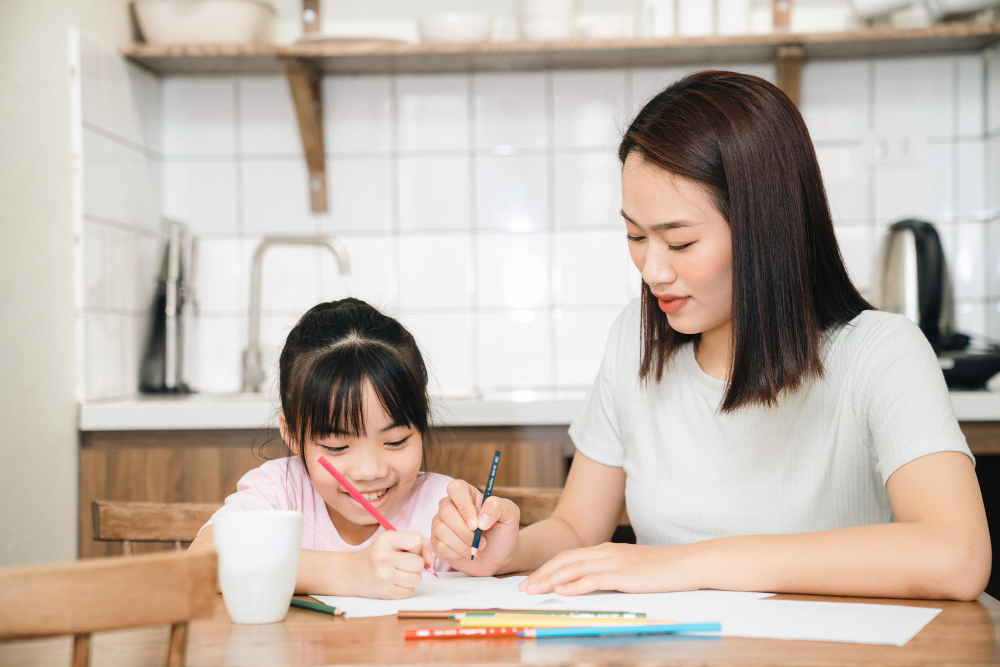
Our classroom display board for picture discussion activities is quite large. To hang it on the wall, both sides need to be secured at the same time. I invited a student to come to the front. The board was too wide for me to secure both ends on my own, so I said to her, “I can’t reach both sides by myself. Could you give me a hand? You hold this end while I secure the other!” Working together, we managed to hang the board securely.
Learning Through Experience
Looking at the board now firmly in place, I explained to the class, “Just now, your classmate helped me, and I helped her. When we work together and help each other complete a task, that is called ‘互相帮助’!” At that moment, the abstract meaning became connected to the movements they had experienced and the scene they had seen.
Putting the Words into Use
Keeping the students’ language needs in mind, I did not ask them to make sentences without any guidance. Instead, I gave them a simple sentence frame to help them get started:
“When we were …, I helped my teacher …, and my teacher helped me …. We helped one another.”
With this sentence frame, the students knew where to begin. Drawing on what they had just experienced, they were able to describe the scene of helping one another naturally and in complete sentences.
Through this shared experience, in which each person’s effort depended on the other’s, students gained a concrete memory of the physical actions and cooperation involved. The next time they saw “互相帮助”, they could draw on that experience to understand its meaning more readily. Through this shared experience, in which each person’s effort depended on the other’s, students gained a concrete memory of the physical actions and cooperation involved. The next time they saw “互相帮助”, they could draw on that experience to understand its meaning more readily. 【做什么】”)时。Another example involves helping students use spatial relationships to build sentences, following a pattern such as “[Who] is [where], [doing what].” I used a model mountain on the table to create a scene showing “山上” (up on the mountain) and “山下” (at the foot of the mountain), along with toy goats. Action 1, up on the mountain: A student held the “big goat” toy, then raised both hands above their head to make a goat gesture and said loudly, “The big goat is eating grass up on the mountain.” Action 2, at the foot of the mountain: Another student then moved the “little goat” toy to the entrance of a cave at the foot of the mountain. Folding their arms and curling up to pretend to sleep, they said softly, “The little goat is sleeping at the foot of the mountain.”
By combining hands-on learning materials with gestures and movement, students could experience the difference between these locations in a concrete way, connecting what they did with their hands to what they understood. The next time they used this sentence pattern, the memory of moving the toys and acting out the scene gave them something tangible to draw on, making the once-abstract sentence structure easier to use.
For students with dyslexia, multisensory teaching and learning through meaningful situations can provide valuable support alongside traditional language learning. Connecting abstract written symbols with what children see, hear, do and say gives them more pathways to understanding. Physical movement and real experiences of working together help bring words to life, making their meanings and uses easier to grasp. When learning goes beyond repetitive memorisation, children have more cues to help them remember and can begin turning the Chinese vocabulary they have learnt into language they use naturally.