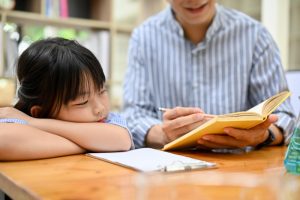
Watching their child work hard to memorise vocabulary lists every day, only to struggle to find the right words during oral exams or everyday conversations, leaves many parents feeling worried and puzzled. “We don’t have specialised teaching methods at home. How can we help our children understand, remember and use these Chinese words?”
Helping your child understand words, recall vocabulary and express themselves does not have to happen at a desk. Your living room, dining table and even bathroom can offer wonderful opportunities for learning. Words in a book can feel lifeless, but placing them in familiar everyday situations, together with real objects, actions and spoken language, brings their meanings to life. This makes them easier for children to understand and remember.
1. Use Everyday Moments to Explore “Competing” and “Giving Way to Others”
Let’s look at how you can introduce these two ideas naturally through small moments in daily life.
How can you teach “竞争” (competing)?
The situation
You have just bought a popular picture book, The Three Billy Goats. Two children reach for the new book at the same time, each eagerly calling out, “I want to read it first!” Neither wants to give way.
What you can say
“There’s only one book, and both of you want to read it first. When you’re both trying to get the same chance to go first, that’s called ‘竞争’, or competing.”
How can you teach “礼让” (giving way to others)?
The situation
While both children are holding out for the book, you can step in and help them work out an arrangement: “How about you read the first three pages, then let me have a turn?” Or one child may notice how much the other wants to read it and offer, “You can read it first. I’ll wait here for a little while.”
What you can say
“Being willing to wait, or choosing to let someone else go first, is called ‘礼让’, or giving way to others.”
Why this helps
Abstract words do not have to be learnt through memorisation alone. The physical feeling of tightening their grip and then relaxing it gives children a concrete connection to the meanings of “competing” and “giving way to others”. The next time they need to describe a similar interaction, that experience can help them recall the words more readily.
2. Practise Longer Sentences Through Everyday Routines
When describing a picture or recounting an event, some children understand what is happening but struggle to put the details into a clear sequence. Try using familiar routines, such as washing hands or putting on shoes, to practise this sentence pattern:
“[Who] first [action A], then [action B], and finally [action C].”
While washing your hands, say the steps aloud as you go: “First, we wet our hands. Then, we rub them with soap. Finally, we rinse them clean!”
You can do the same when putting on shoes: “First, I put on my left shoe. Then, I put on my right shoe…”
Following the order of their own actions helps children understand how to organise their words, making the sentences easier to say.
3. Bring Words to Life Through Actions
With a word such as “照顾” (take care of), simply memorising the English translation may help a child understand its meaning in English. It does not necessarily mean they can use the word comfortably when speaking Chinese.
If a soft toy at home gets dirty, hand your child a wet wipe and let them clean it themselves. As they carefully wipe it, give them a gentle pat and say, “Look, by helping to clean your toy, you’re taking care of it. That’s what ‘照顾’ means.”
Your child can see what is happening, feel the action with their hands and hear the word being used. The word becomes connected to a real experience, making it more meaningful and memorable than a symbol on a page.
Opportunities to learn are often tucked into everyday moments: a little tussle over fruit being handed out, the steps involved in washing hands or putting on shoes, or a tender moment spent helping your child clean a toy.
At the heart of helping children overcome difficulties with spoken Chinese is turning words on a page into living, everyday experiences. Using real objects, movement, sequencing games and acting out situations helps children understand what words mean. It also builds a bank of spoken vocabulary they can draw on in daily life.
At DAS, our Chinese Programme follows this same structured, multisensory approach. Our specialist educators use a variety of concrete learning materials and movement-based activities to guide children through word meanings and the steps involved in organising spoken language, helping them build confidence in speaking Chinese.
So, take your child by the hand and explore the learning opportunities in everyday life together. These shared experiences can help your child understand words more easily, grow in confidence and express their thoughts more fluently in Chinese.